
The short answer
Find a kick hit you can hear clearly and another that gets buried when the bass is playing. Compare them in the full mix at a steady listening level. Try a small balance change first, then test the note length, frequency overlap or layered signals depending on when the problem occurs.
Keep these in mind
- Compare an exposed hit and a buried hit using the same monitor setting.
- Check timing and sustain before adding processing across the whole song.
- Judge a revision in context against both passages.
How do you find the moment the kick or bass disappears?
Pick a short loop where the groove feels clear and another where it loses definition. Describe what disappears. You might lose the leading edge of the kick, the pitch of the bass note or the gap between two hits. Note whether the same problem happens on every kick or only when the bass is sustaining a particular note.
In the problem passage, listen to each part briefly, then together, then with the rest of the mix. Return to the clear passage at the same playback setting. iZotope’s masking examples show how a source can be obvious on its own and harder to hear when a second source occupies some of the same frequency range. Use the difference to locate an audible problem before reaching for a meter.
How do you narrow down balance, sustain and frequency overlap?
Try a small fader move at the problem moment. If the kick comes through and the bass still carries its line, balance may be enough. If a long bass note runs over the next kick, test its release or length on a copy of the session. Compare the change on the sustained note and the next bass entrance. A shorter note can restore space and can also change the pocket.
If balance and length are working, listen for the range in which the parts interfere. FabFilter’s EQ guidance illustrates how the kick and bass can compete in the low end, with overtones contributing higher up. Audition a small cut on the part that can spare that energy. If a layered kick or a bass DI and amp sound thin together, compare their individual signals and their sum before applying EQ to the pair.
| What you hear | First change to audition | Check in context |
|---|---|---|
| Kick is consistently buried | Small balance move | Kick reads without losing the bass phrase |
| Kick disappears under one sustained note | Shorten that note or its release | Next downbeat and original groove |
| Both parts are clear alone and blur together | A small EQ change in the area of overlap | Kick attack and bass pitch across more than one note |
| A layered source sounds thinner when combined | Compare the layers and their sum, then check timing and polarity | The improvement holds beyond one hit |
When does kick-triggered ducking help?
If you want a sustained bass note to keep its length and give the kick a little room at each hit, try having the kick trigger brief gain reduction on the bass. Ableton’s Compressor documentation shows this routing with an external sidechain. Listen for whether the kick attack returns and whether the bass comes back at the right point in the groove. Check a passage with faster hits for an audible swell or a bass line that stays down too long.
Constructed example for the fictional Soft Signals track Lantern. The kick at 0:42 reads in the verse. In the second chorus, the same kick loses its attack at 1:31 beneath a held bass note. Shortening that note changes the feel, so the engineer tries a brief dip triggered by the kick. The team checks both passages. The chorus hit is clearer and the bass still carries across the bar.
How do you review the change with someone else?
Export the original and revised mixes from the same start and compare the two marked passages at a similar level. Keep other decisions steady for the test. Listen through a transition with more than one bass pitch, then check the full mix on a familiar system. The mix translation guide can help when the symptom only appears on a particular speaker.
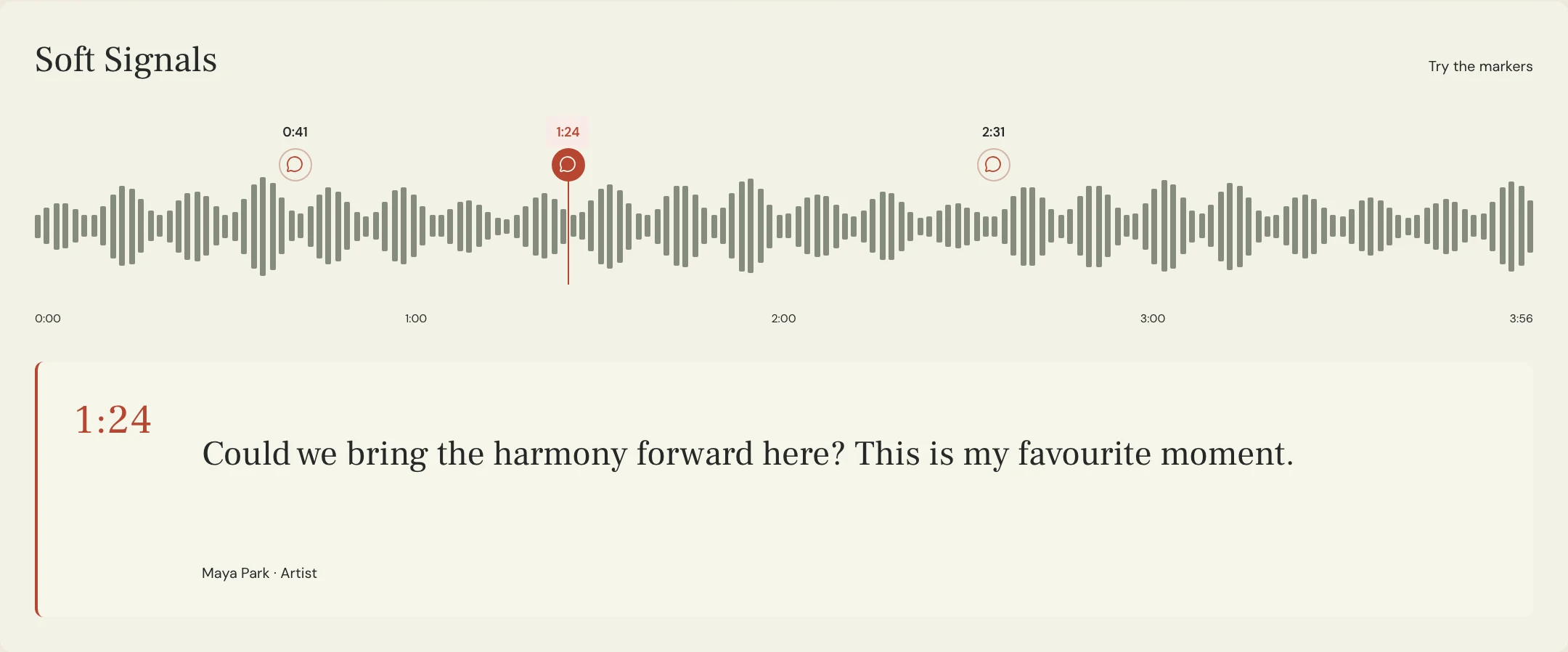
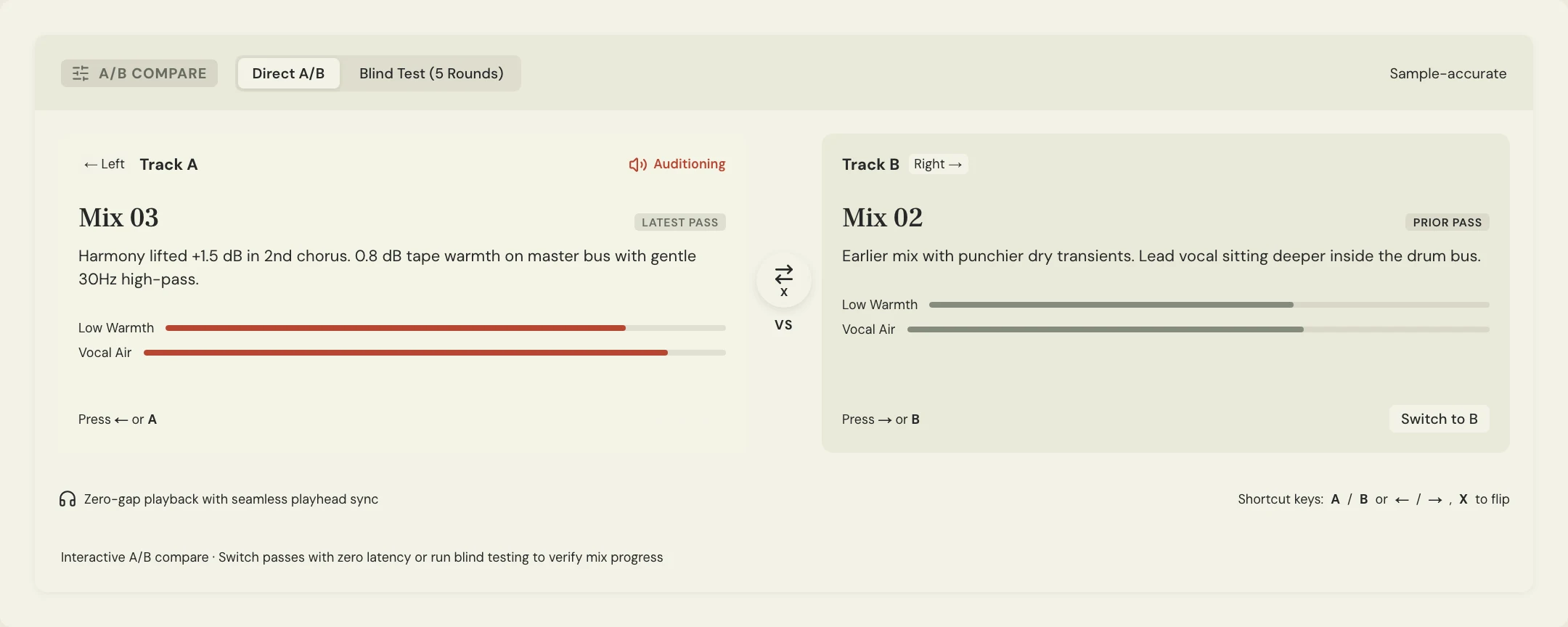
Use labeled passes in MixPass and a timestamped note for the hit that prompted the change. Switch between the passes with A/B comparison and describe the relationship you hear. A note that names the buried kick and the bass phrase to retain gives the engineer a specific check for the next export.
A few more things
Common questions
Should the kick or bass always occupy the lowest frequencies?
Choose which one carries the weight in the arrangement. Compare the specific kick sound and bass notes together and check that the groove still reads.
Does a frequency overlap automatically need EQ?
Act on what you hear. Two parts can share energy and work together. Check whether the overlap obscures a useful note or attack.
Should I invert polarity on every kick that sounds weak?
Use polarity as a comparison when combining layers, and verify the result across the relevant hits. A single hit cannot tell you how different notes and layers will sum.
How much should I duck the bass?
Use enough reduction to hear the kick through the bass and check when the bass recovers. Adjust against the groove of the actual passage.
Further reading
Technical background from the original sources referenced in this guide.
Your next pass
Give the song a shared home.
Keep the versions, lyrics, feedback, and people together in MixPass.
Building an upcoming single or EP? Apply for the Founding Testers Program for 3 months of Pro free in exchange for feedback (50 early seats).