
The short answer
Check mix translation by playing the same named mix and a familiar reference on a few useful systems at comparable listening levels. Listen for whether the vocal, groove, and other priorities still come through. Write down where a problem repeats, then reproduce it in your main setup before asking for a mix change.
Keep these in mind
- Use the same mix and excerpt to compare systems.
- Treat device-specific changes as clues and check whether they affect the song.
- Send one timestamped, reproducible problem and a clear recheck.
What should stay consistent when the playback system changes?
Pick two or three musical priorities for the song before you leave your main setup. For example, you might want the lyric to stay intelligible, the kick pattern to remain easy to follow and the lift into the last chorus to read clearly. Listen for those relationships. A small speaker may give you much less deep bass and still communicate the groove through what it can reproduce.
Choose a system that helps you test each question. Headphones can help isolate an abrupt edit or a vocal tail. A phone speaker can reveal whether a consonant or cymbal gets in the way of the lyric. A familiar set of speakers in a different room gives another read on the low end. iZotope describes these different playback perspectives and recommends listening to familiar references on the same device.
How do you make two playback checks comparable?
Use one named export for the whole round. Write down the exact device, playback app and any EQ, spatial or enhancement settings that matter. Keep the listening level comfortable and bring the reference and your mix to roughly comparable perceived loudness on that device. If a setting or file changes between listens, record it as another test instead of folding it into the first one.
Start with a short section containing the concern and the passage immediately before it. Then play the same section on your main setup again. A harsh word you can now hear in both places is a better revision target than a general impression that the whole mix sounded bright in one room. Keep the reference excerpt consistent too, and pick one with a comparable musical role.
When does a difference warrant a mix revision?
Use the reference to help separate the playback system from the mix. If low bass drops away in both tracks on one small speaker, write down what the system removes. Then ask whether your song still communicates its bass line or rhythm there. A listening limitation can still matter if it affects a common way your audience hears the song. The useful question is what musical information the listener loses.
If the problem appears in the same phrase on independent systems, try reproducing it on your main setup and describe what masks what. When the symptom only happens with a specific app setting, repeat the listen with that setting disabled to isolate it. A controlled mono check is a separate follow-up if the evidence points toward a summing problem.
| Observation | Control check | Useful next step |
|---|---|---|
| Deep bass disappears on the phone | Play the reference and check whether the rhythm remains clear | Record the limitation and ask for a change only if the musical priority fails |
| Same lyric is buried on phone and earbuds | Recheck the exact words in the main mix and note the competing sound | Ask for a targeted vocal clarity revision |
| Ending cuts off in one app | Play the same source file in a second app with the settings documented | Separate an export problem from playback behavior before sending a note |
What does an actionable translation note look like?
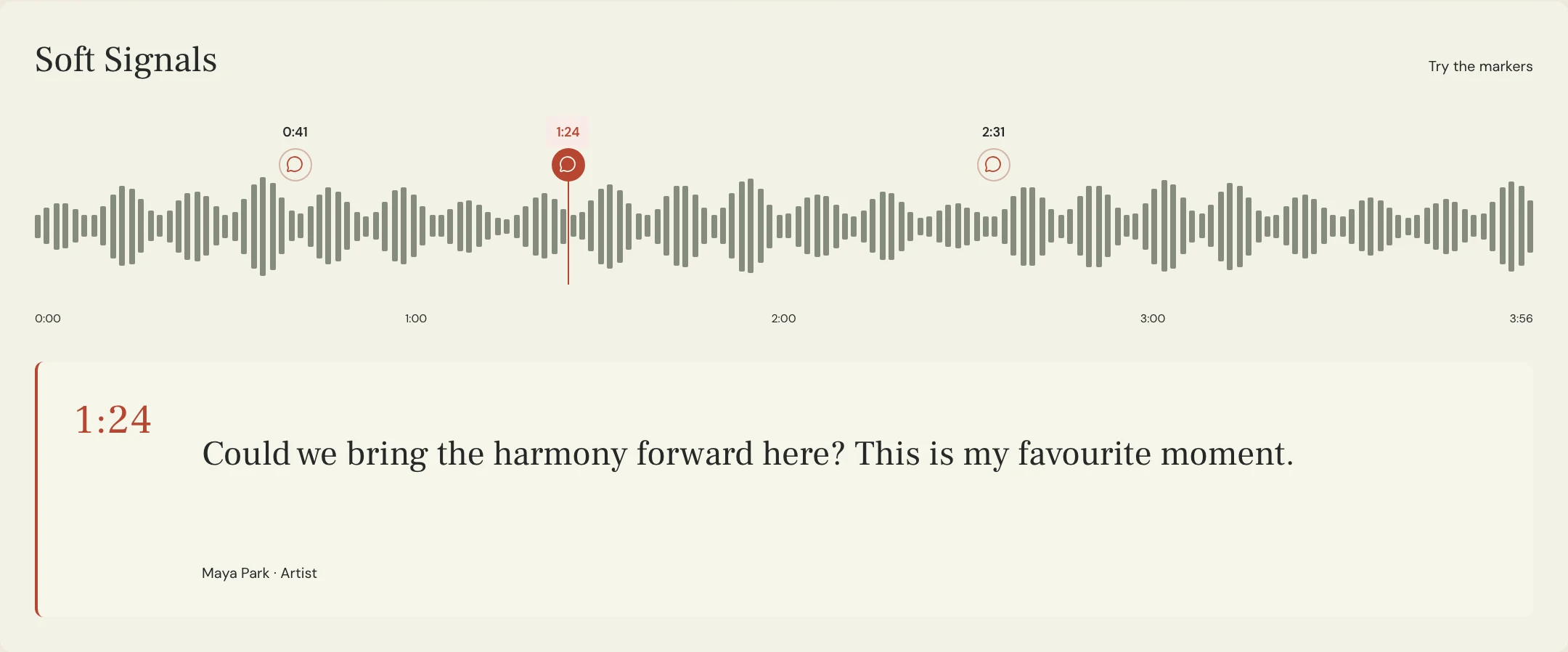
Constructed example: on the fictional Soft Signals mix Lantern Mix 08, the last line of the second chorus at 1:19 is easy to follow on studio speakers but hard to catch on a phone and on earbuds. Maya first suspects a quiet vocal. Back in the main setup she can reproduce the loss when the bright guitar enters under the line. The familiar reference plays its vocal clearly on both systems at a comparable listening level.
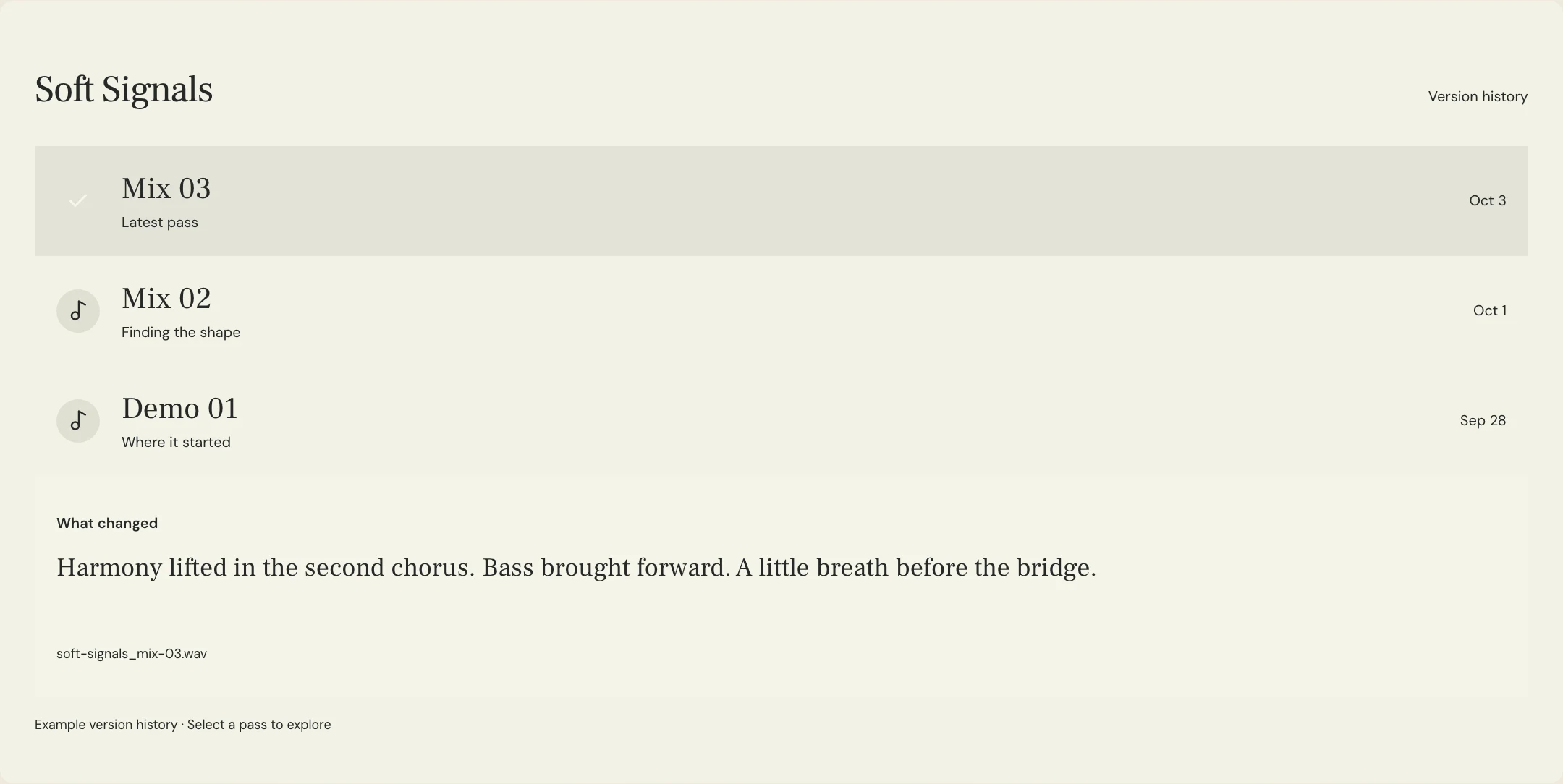
The team asks the engineer to keep those words intelligible when the guitar enters while preserving the chorus lift. They avoid specifying an EQ move from the phone alone. In MixPass, anchor the note to 1:19 on Mix 08 and put the playback observations in the text. When Mix 09 comes back, replay that phrase on the same systems and listen through the rest of the chorus for side effects.
A few more things
Common questions
Do I need a car test?
Use the systems you have and know. Add a car or other environment when it represents an important listening context and you can test safely while stationary.
Why does bass disappear on a phone?
Small playback systems often reproduce less deep bass. Use a familiar reference and check whether you can still follow the part or the pulse.
Should my mix sound identical on every system?
Expect tonal and spatial differences. Check that the main relationships and emotional cues stay readable.
Should I test a new pass on every device again?
Retest the systems that exposed the original issue and check the full section in your main setup for new problems.
Further reading
Technical background from the original sources referenced in this guide.
Your next pass
Give the song a shared home.
Keep the versions, lyrics, feedback, and people together in MixPass.
Building an upcoming single or EP? Apply for the Founding Testers Program for 3 months of Pro free in exchange for feedback (50 early seats).