
The short answer
To A/B compare two mixes fairly, use the same playback system, match their perceived listening levels, and compare the same musical section. Ask one focused question at a time, switch between passes, then listen to the whole song. Use blind comparisons to reduce expectations, and record the reason for your preference before choosing a pass.
Keep these in mind
- A louder pass can distract from the actual change being tested.
- Compare the same moment on the same playback system.
- A preference result needs a musical explanation and a full-song check.
How do you prepare two mixes for comparison?
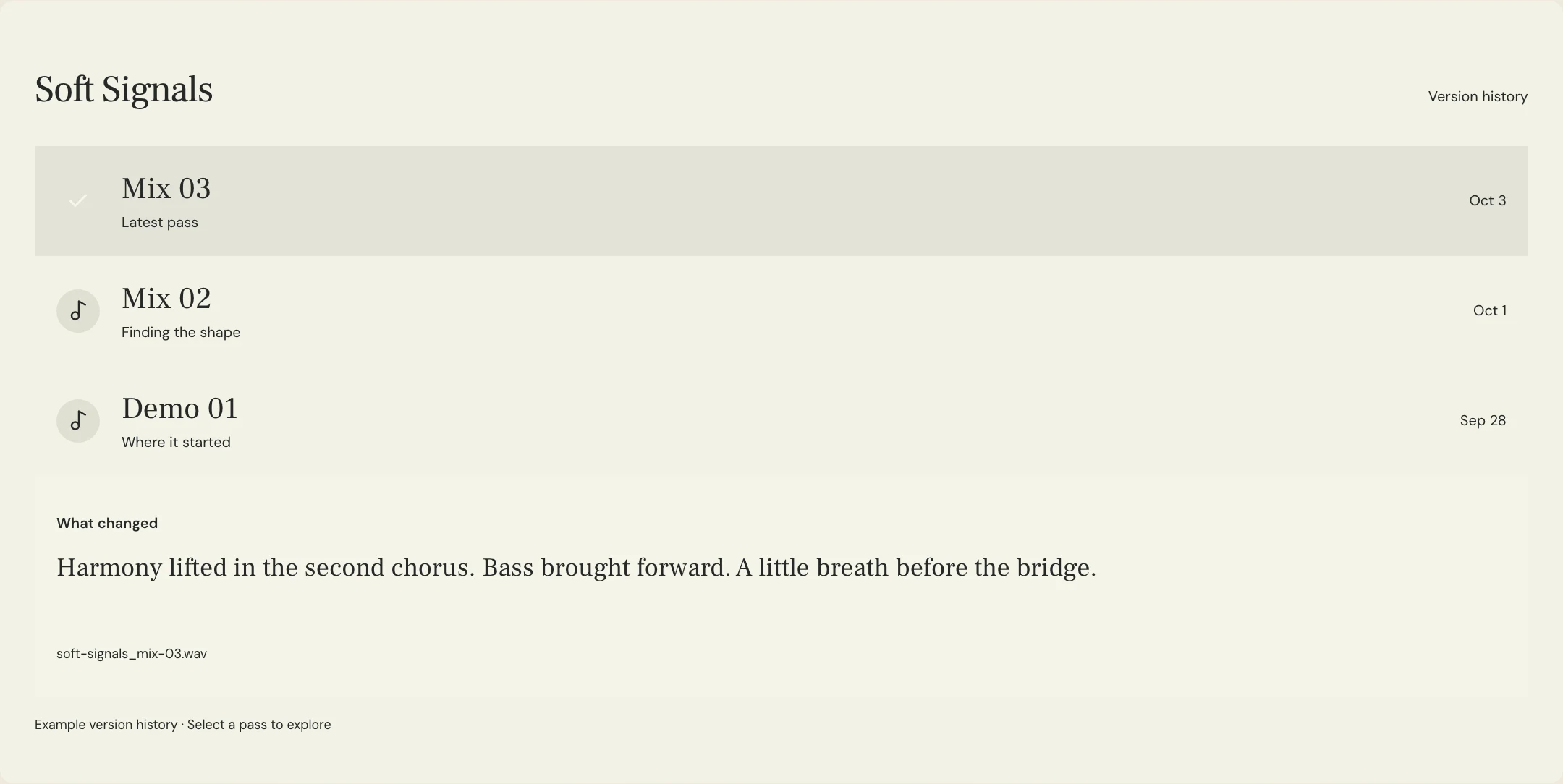
Choose the exact passes and identify what changed. If Mix 04 alters both the vocal balance and drum sound, you can still compare it to Mix 03, but separate those questions in your notes. Otherwise a preference for one change may hide a dislike of the other.
Use comparable listening levels rather than assuming equal fader positions make the sources equally loud. iZotope’s reference guidance emphasizes level matching to avoid loudness influencing balance decisions. Reduce the louder source as needed and keep your monitoring level comfortable.
What should you listen for during an A/B comparison?
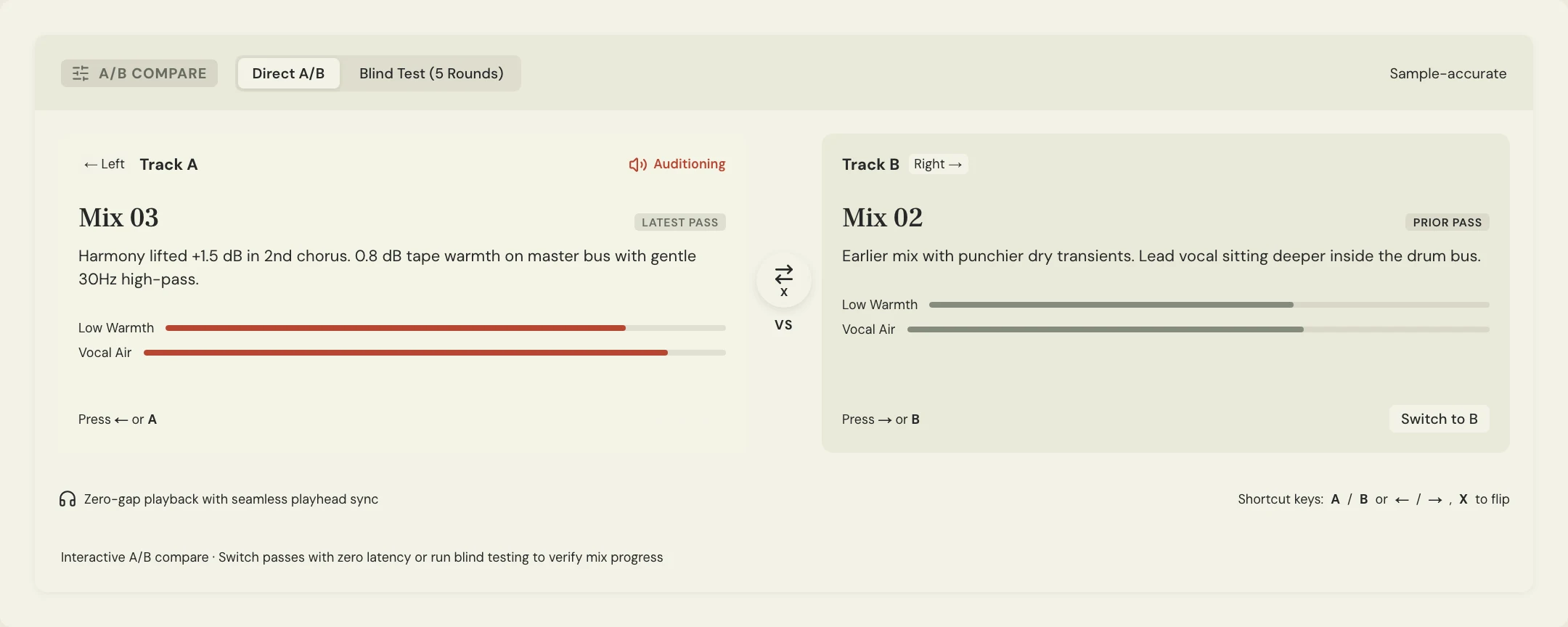
Pick one part of the song and one question. For example, listen from the second verse into the chorus and ask whether the new harmony supports the lead. Switch several times without changing your playback setup, then listen longer enough to hear the section as music rather than isolated details.
MixPass provides A/B auditioning between audio passes. Confirm the selected versions and any available gain-matching setting before judging a subtle revision. The preview images illustrate the controls; they do not contain a measured audio experiment or prove one mix is better.
- Identify the versions and their change notes.
- Choose the same section on both passes.
- Set comparable listening levels.
- Write one question about balance, tone, dynamics, or feeling.
- Listen in context before confirming the preference.
When is a blind mix comparison useful?
A blind comparison can reduce expectations created by labels such as “new,” “analog,” or “final.” MixPass’s blind comparison uses five rounds in the current interface. That is a structured listening aid, not a statistical proof that one version is objectively superior.
Constructed example: an artist prefers Mix 04 when the label is visible, but cannot consistently distinguish it from Mix 03 when the sources are hidden and playback levels are comparable. The useful conclusion is that the change may be less meaningful than expected. Revisit the goal instead of declaring the test failed.
COMPARISON: Soft Signals, Mix 03 vs Mix 04
CHANGE: Harmony level in the second chorus
SECTION: 1:18–1:40
QUESTION: Does the harmony support the lead more clearly?
LEVEL CHECK: [How comparable listening levels were set]
OBSERVATION: [What you heard without relying on the labels]
PREFERENCE / REASON: [Pass and musical reason, or no clear preference]
FULL-SONG CHECK: [Does the change work outside the loop?]
Copy or download, then fill in the details for your song.
How do you choose a mix after comparing it?
Record what you prefer and why. “Mix 04 keeps the chorus words clearer while adding the harmony” gives collaborators a useful decision. A vote without a reason may tell you which pass won while leaving the next revision direction unclear.
Listen through the entire song once the focused comparison is done. A change that helps one chorus may alter how the verses feel by contrast. Keep both versions available and use the agreed approval process before treating the selected pass as the final delivery source.
A few more things
Common questions
Is louder always better in a mix comparison?
A louder source can seem more impressive, which is why comparable listening levels matter. Judge the musical change separately from the level difference.
Is a five-round blind test scientifically conclusive?
No. It can organize listening and reduce label expectations, but a small preference exercise does not establish universal quality or a statistically conclusive result.
Should I compare the entire song every time?
Start with a focused section to understand the change, then do a full-song listen before approval. A local improvement can create a tradeoff elsewhere.
What if I hear no meaningful difference?
Record that outcome. Recheck the selected passes and levels, then ask whether the change needs further work or whether the existing pass already serves the goal.
Further reading
Technical background from the original sources referenced in this guide.
Your next pass
Give the song a shared home.
Keep the versions, lyrics, feedback, and people together in MixPass.