
The short answer
To compare chorus ideas, record each alternative against a consistent backing and listen to the transition from the verse into the chorus. Judge the hook’s meaning, melodic lift, singability, and relationship to the song’s central idea. Change one major variable at a time and record why you choose a version before developing it further.
Keep these in mind
- Compare the chorus in context, including how it arrives.
- Use similar backing and playback levels to reduce distractions.
- Write down the reason for the choice, not just the winning label.
What makes one chorus idea a better fit?
Start with the song’s intended feeling. A chorus can be more immediately memorable while changing the point of view, or more emotionally accurate while needing a stronger melodic shape. Decide which goal matters for this pass so the writers are not answering different questions.
Listen for the words a listener can retain, the melody’s relationship to the verse, and whether the vocalist can deliver the phrase naturally. There is no universal rule that a chorus must be louder, higher, or more crowded. The useful question is whether it creates the destination this song needs.
How do you prepare a fair chorus comparison?
Keep the backing and entry point consistent. If one chorus has a finished vocal stack and the other is a phone recording, you may be choosing the more polished performance rather than the stronger idea. Record comparable scratch takes and identify any unavoidable differences.
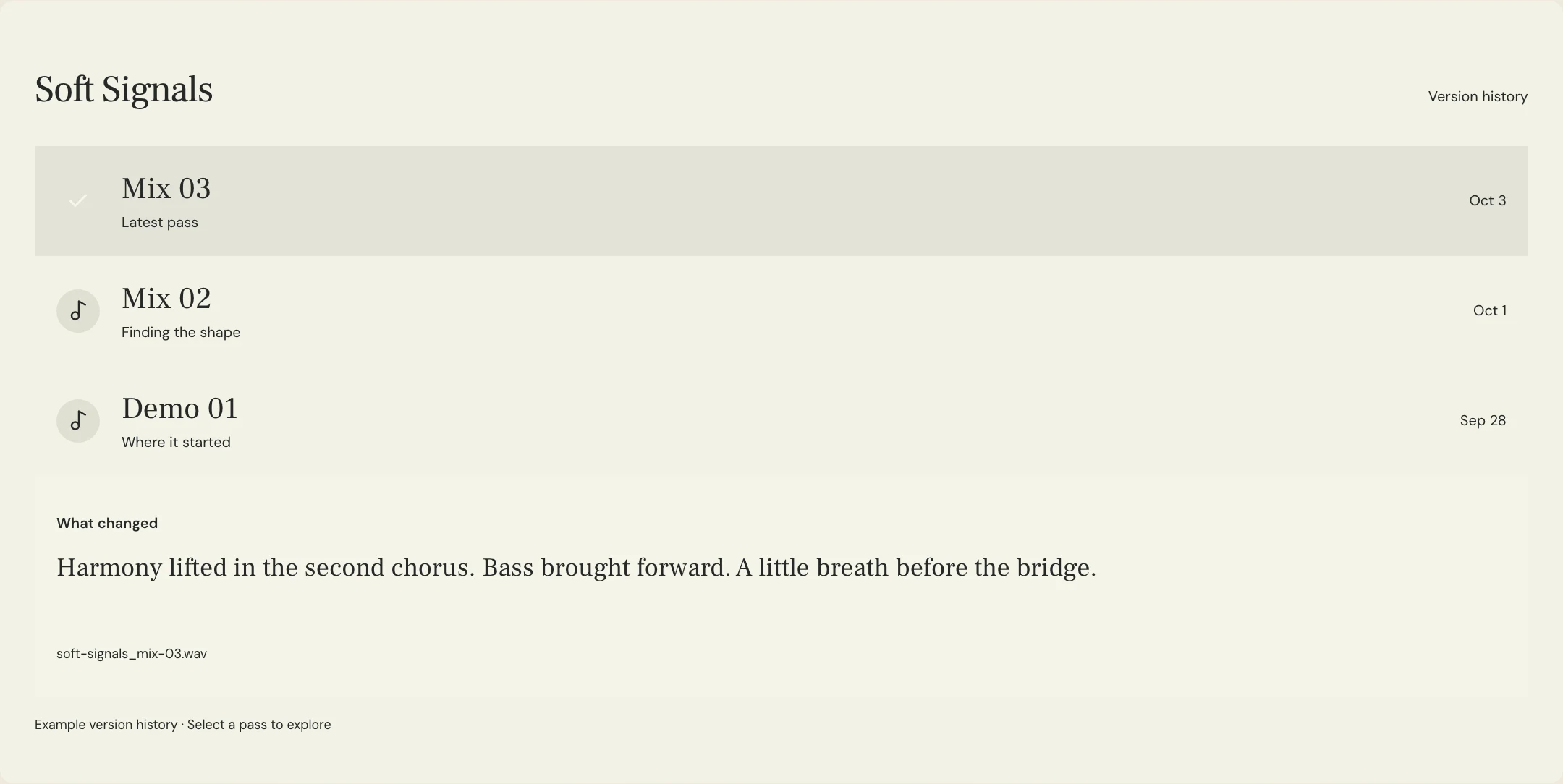
In MixPass, keep each chorus demo as a named pass and note the variable you changed. Preserve the verse lead-in when possible. A short isolated hook can be helpful, but the transition often reveals whether the idea belongs in the song.
What listening exercise can co-writers use?
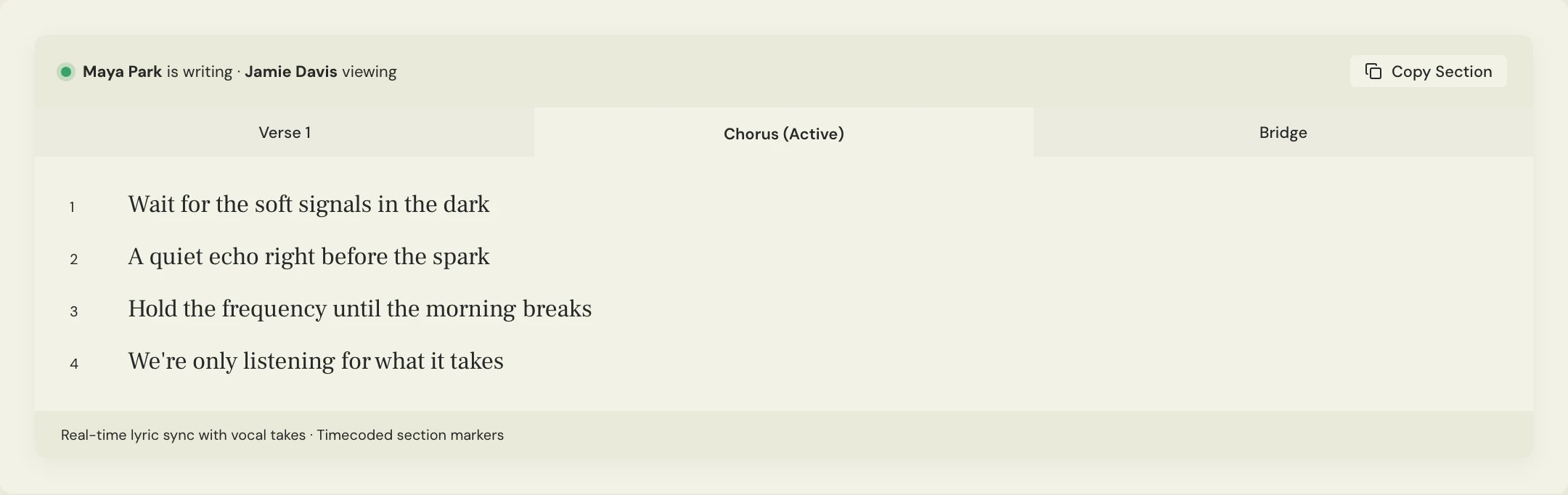
Constructed example: Chorus A of Soft Signals asks the listener to wait for a connection; Chorus B asks them to pursue it. The writers sing each over the same backing and listen from the end of verse one. Their decision concerns the narrator’s intent, not which recording happens to sound louder.
Each writer fills in the table independently, then compares observations. If one idea communicates the point of view and another has the better melodic ending, try a third pass combining those strengths. Keep the original alternatives so you can check whether the hybrid actually improves the song.
| Listening question | Chorus A | Chorus B |
|---|---|---|
| What is the narrator doing? | Waiting for a connection | Searching for a connection |
| What should we test? | Does the restraint feel intentional? | Does the urgency fit the verse? |
| What must stay consistent? | Backing, lead-in, playback level | Backing, lead-in, playback level |
How do you turn the comparison into a writing decision?
Write the chosen lyric and melody direction into the working notes. Explain the reason in one sentence, such as “A fits the patient narrator, but we will shorten the last phrase.” That helps a producer preserve the decision when the arrangement grows more detailed.
Update the agreed lyric section and label the next demo accordingly. If the writers cannot choose, define the remaining uncertainty and record another targeted experiment. Replaying two ideas without a shared question tends to produce more opinions rather than a decision.
A few more things
Common questions
Should we compare choruses blind?
A blind comparison can help with expectations about different recordings. For songwriting, also discuss meaning and structure openly; those decisions need context that a hidden version label cannot supply.
Can we combine parts of two chorus ideas?
Yes. Treat the combination as a new pass and listen to it in context. A hybrid should solve a specific problem rather than preserve every collaborator’s favorite line.
How long should a chorus comparison clip be?
Include enough of the preceding section and following transition to hear the chorus’s role. A hook-only clip can be useful for phrasing, but may hide an awkward arrival or exit.
What if neither chorus works?
Identify whether the problem is meaning, melody, arrangement, or delivery. Keep any useful phrase, then write a new version focused on the unresolved issue.
Your next pass
Give the song a shared home.
Keep the versions, lyrics, feedback, and people together in MixPass.