
The short answer
To give feedback on an unfinished song, first ask what stage it is in and what the creator wants help with. Describe the moment you hear, explain its effect on you, and suggest a goal rather than prescribing a fix. Separate songwriting, arrangement, performance, and mix comments so the next task stays clear.
Keep these in mind
- Ask what kind of feedback is welcome before listening.
- Describe a listener experience before suggesting a technical solution.
- Give the creator a small set of decisions they can act on.
What kind of feedback does this demo need?
A voice memo may be testing a lyric or melody. A produced demo may be testing whether the chorus arrives with enough energy. A nearly finished recording may need performance or mix feedback. Listen to the question the creator is asking instead of grading every unfinished part at once.
Before pressing play, ask what is already decided and what remains open. If the vocal is explicitly a scratch take, note only performance issues that prevent you from understanding the idea. You can mention a distracting problem without turning the session into a vocal production review.
| Stage | Helpful question | Usually save for later |
|---|---|---|
| Writing | Is the central idea clear? | Detailed reverb or drum balance |
| Arrangement | Does the chorus feel like a destination? | Final mastering level |
| Performance | Does the delivery support the lyric? | Changing an agreed song structure |
| Mix review | Can you hear the important elements? | Rewriting the chorus without discussing scope |
How do you make creative feedback specific?
Point to a moment and explain your reaction. “The second verse loses momentum after the first line” is more useful than “It gets boring.” You are giving the writer information about your experience, not announcing an objective verdict. Say when you are uncertain and distinguish a preference from a problem.
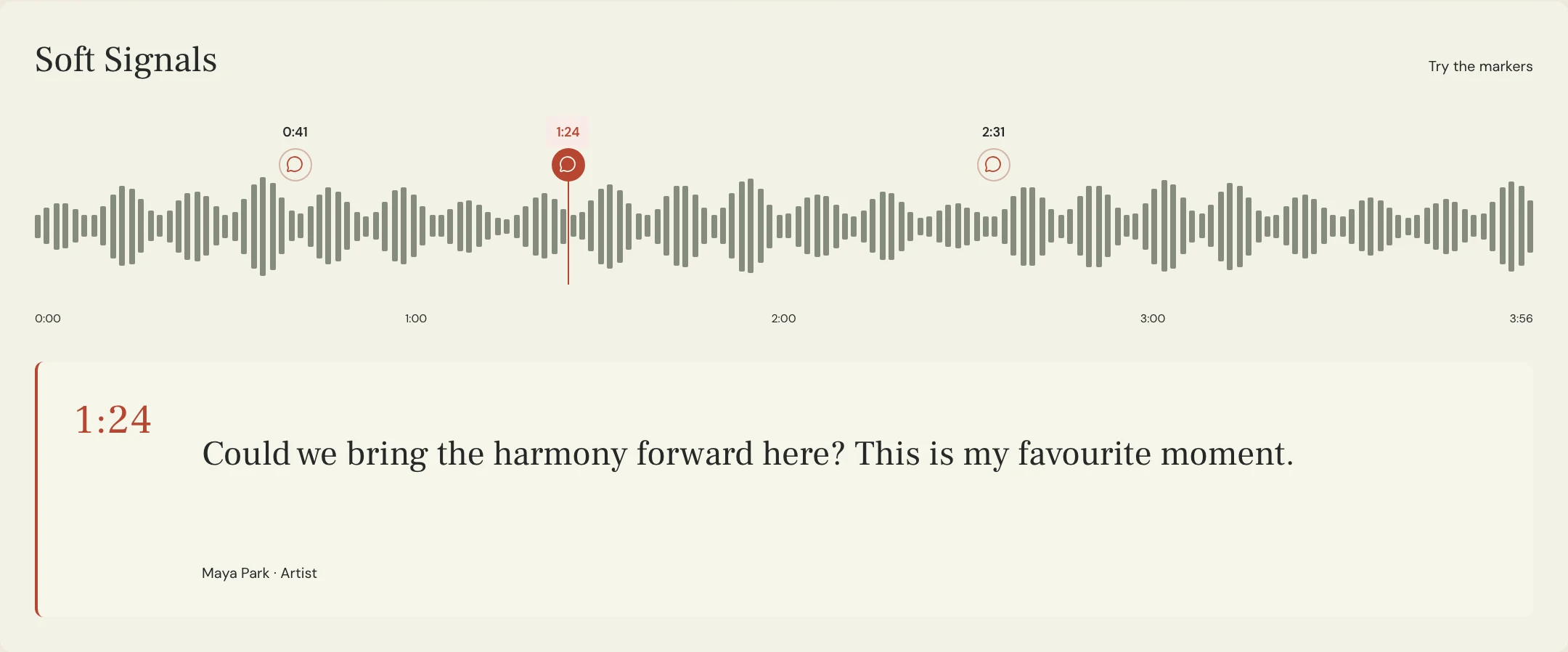
In a MixPass room, place feedback at the relevant moment in the audio pass. Keep each comment focused on one observation so a collaborator can ask a question or respond without unpicking a paragraph about five unrelated things.
What does useful demo feedback sound like?
Constructed example: a duo is testing the final chorus of Soft Signals. “Make it bigger” could mean louder drums, another vocal, a stronger lyric, or a longer section. “When the last chorus arrives at 2:46, I want a clearer change from the bridge; could we try a harmony on the first line?” describes the moment, goal, and one possible experiment.
Also identify what should stay. If the quiet opening creates the feeling you love, say so. A collaborator may otherwise solve your request by making the entire arrangement denser and accidentally remove the song’s strongest contrast.
MOMENT: 2:46, first line of the last chorus
OBSERVATION: The return feels similar to the earlier chorus.
GOAL: A clearer emotional lift after the bridge.
POSSIBLE EXPERIMENT: Add a harmony to the first line.
KEEP: The quiet opening and space around the lead vocal.
Copy or download, then fill in the details for your song.
How much feedback should you send at once?
Choose the few decisions that matter for the next pass. If your notes include a melody concern, a lyric alternative, and several balance changes, identify the writing decision first. There is little value in polishing a vocal line that may be replaced.
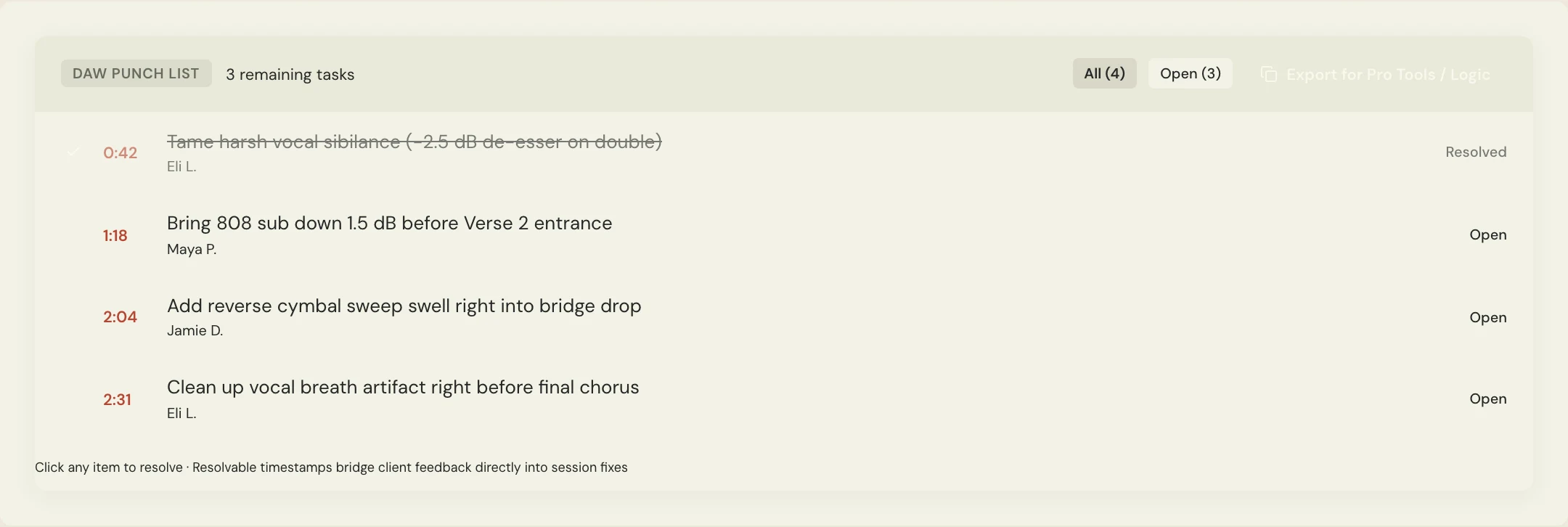
Ask the creator which suggestions they want to try and record that choice. A MixPass punch list can hold agreed changes, but a creative suggestion does not need to become a mandatory task. Leave room for the artist to choose a different solution that achieves the same goal.
A few more things
Common questions
Should I give feedback if I do not know technical terms?
Yes. Describe what you hear, where it happens, and how it feels. Clear listener language often helps more than a guessed EQ setting or production technique.
How do I give negative feedback constructively?
Be specific and tie your concern to the creator’s goal. Explain which part is not communicating for you, identify something worth preserving, and leave room for a different solution.
Should feedback always include a suggested fix?
No. An accurate observation can be enough. Offer a possible experiment when helpful, but let the person responsible for the song decide how to address the issue.
What if collaborators disagree about the demo?
Identify the shared goal and compare the proposed alternatives against it. If the disagreement is a taste preference, use the decision process you agreed on rather than treating either opinion as a technical fact.
Your next pass
Give the song a shared home.
Keep the versions, lyrics, feedback, and people together in MixPass.