
The short answer
To collect band feedback, have everyone review the same pass with the same listening brief, then gather comments before making changes. Group requests by the decision they affect, identify conflicts, and agree on one direction for each. Choose a coordinator to send the consolidated notes and confirm what the next version should address.
Keep these in mind
- One review pass prevents comments about different versions from colliding.
- Discuss conflicting goals before sending instructions to an engineer.
- A named coordinator collects decisions without silencing other contributors.
What should bandmates agree on before reviewing a song?
Identify the version, the review deadline, and the kind of decision you need. Are you reviewing the arrangement, checking individual performances, or approving the mix? A bassist listening for tone and a singer questioning the chorus lyric may both have valid concerns, but they are not reviewing the same stage.
Ask everyone to listen through once before writing notes. Then let each person add observations to the shared pass. Keeping that first round independent can reveal which issues several people notice without the loudest early opinion shaping the entire conversation.
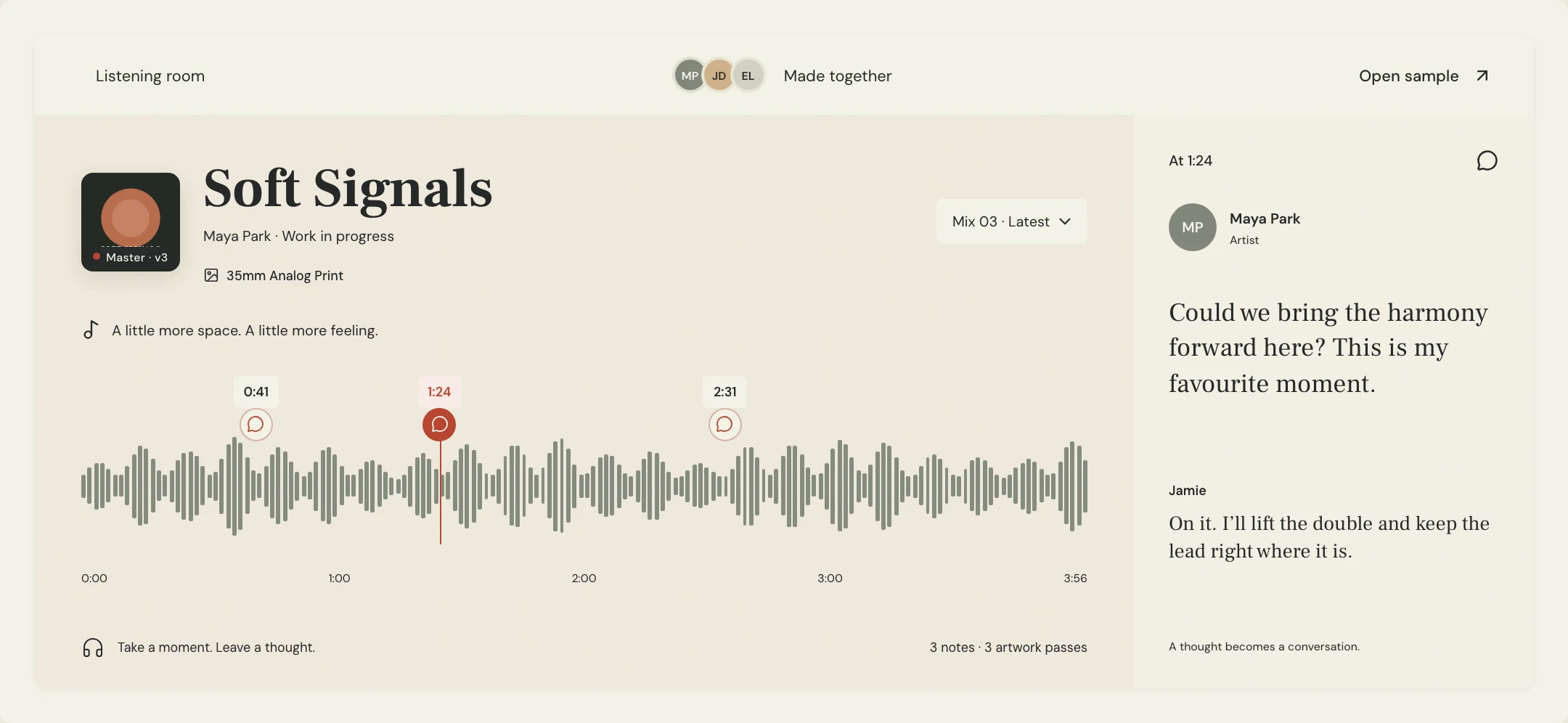
How do you handle contradictory band feedback?
Group notes by section or musical goal. “More bass” and “Less bass” may mean different things: one person wants the note definition clearer, while another hears low-frequency masking. Ask each person what they are hearing and on which playback system before choosing a change.
When a conflict is taste rather than a shared problem, refer to the song’s agreed direction. If the band wants an intimate verse, adding every suggested part may work against it. A coordinator should document the chosen direction and what will remain unchanged.
| Comments received | Question to clarify | Possible agreed direction |
|---|---|---|
| More bass / less bass | More definition or more low-end weight? | Keep weight; improve note clarity |
| Dry vocal / wetter vocal | Intimacy or distance in which section? | Dry verse; wider chorus |
| Add guitar / leave space | What should lead this moment? | Try the guitar only in the last chorus |
What should consolidated band revision notes look like?
Constructed example: four bandmates review Mix 03 of Soft Signals. Their coordinator collects the vocal, bass, and bridge comments, then sends one set of approved requests. They do not average everyone’s preferred fader positions. They agree on the musical result the engineer should aim for.
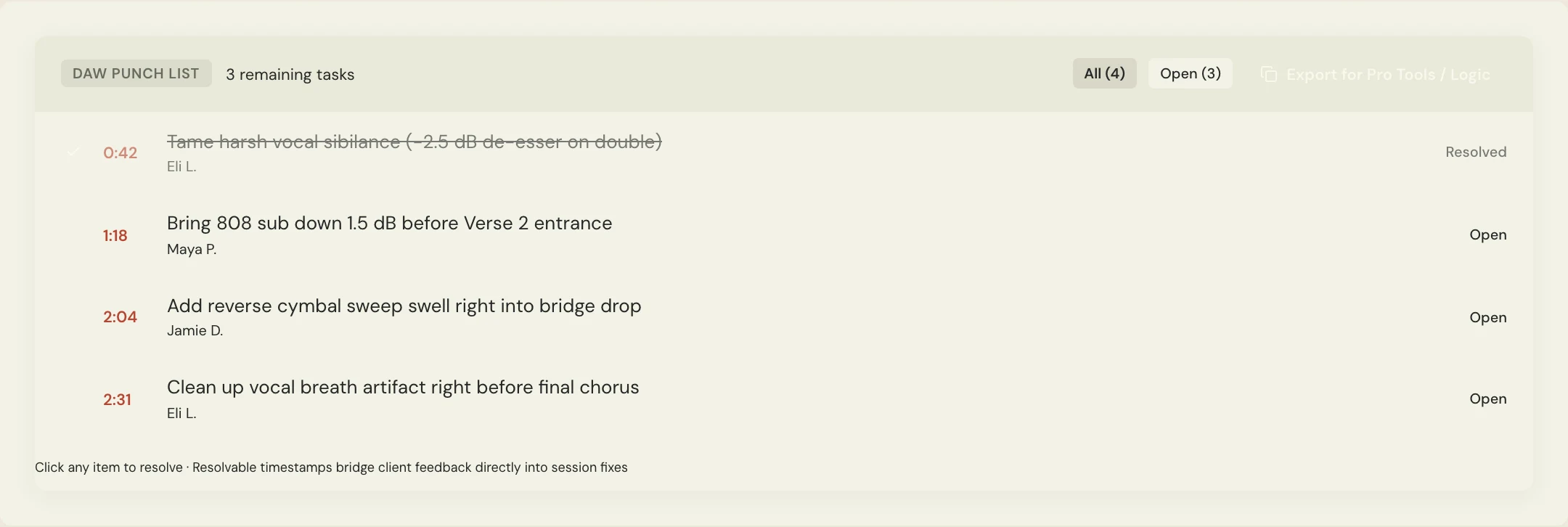
Include priorities and keep separate issues in separate notes. A punch list is useful after the band agrees; before that, discussion is still needed. Tell the engineer which suggestions are exploratory and which changes the band has approved.
PASS REVIEWED: Soft Signals, Mix 03
COORDINATOR: Maya
PRIORITY 1: 1:24, make the harmony easier to follow without moving the lead back.
PRIORITY 2: 0:41, retain bass weight but bring out the note definition.
EXPERIMENT: 2:31, try a little more space before the bridge return.
KEEP: Verse intimacy and the current drum feel.
NEXT REVIEW: Everyone listens to Mix 04 before another round.
Copy or download, then fill in the details for your song.
How do you stop the next round from reopening every decision?
Attach a short change summary to the new pass and ask listeners to check the agreed requests first. A bandmate can still raise a new issue, but label it as new so it does not appear to be an unresolved request from the previous round.
Keep the earlier version available for comparison. If a change solved one problem and introduced another, describe both. Confirm the final decision in writing against the exact pass rather than relying on a group chat full of thumbs-up responses to different messages.
A few more things
Common questions
Who should collect the band’s notes?
Choose someone with time to gather comments and communicate decisions accurately. They do not need to make every creative choice, but the group should trust them to represent the agreed direction.
Should bandmates send notes directly to the engineer?
Decide this with the engineer and band. A consolidated round usually makes competing instructions easier to resolve, while the shared room can preserve each person’s original observation.
What if one person misses the review deadline?
Agree in advance how late notes are handled. A missed deadline should not silently count as approval; the coordinator should clarify whether work proceeds or the decision waits.
Do we have to accept every suggested change?
No. A suggestion can be useful without becoming a task. Record the decision and explain which goal or constraint led the group to accept, defer, or decline it.
Your next pass
Give the song a shared home.
Keep the versions, lyrics, feedback, and people together in MixPass.