
The short answer
To use reference tracks with a producer, choose a small set and explain one specific characteristic you want from each. Point to a section or timestamp, describe its musical effect, and say what should not be copied. Separate arrangement and performance references from mix references, then compare new demos against the agreed direction.
Keep these in mind
- A reference needs an explanation, not just a link.
- A song can be an arrangement reference without being a mix target.
- Listen at comparable levels when judging balance or tone.
How do you choose useful production references?
Choose songs that illuminate a decision in your own project. One might show a sparse verse, another a vocal that remains close through a wide chorus. Explain the characteristic you mean rather than expecting the producer to identify it from the entire recording.
Pick references you can discuss together. If one points toward a dry intimate vocal and another toward a distant wash, specify the sections where each applies. Contradictory references are not automatically a problem, but unexplained contradictions leave the producer guessing.
What should you write beside each reference track?
Use the same short structure for each entry: track, moment, characteristic, musical goal, and what not to borrow. Include links to legitimate listening sources. Do not upload another artist’s recording unless you have the necessary permission to use and share that file.
Constructed example: Maya likes a reference’s sparse opening because the vocal feels exposed. She does not want its guitar tone or tempo. Naming that distinction helps Jamie build an original arrangement that delivers the same sense of closeness.
REFERENCE: [Artist / track / legitimate listening link]
MOMENT: [Timestamp or section]
LISTEN FOR: [Specific musical characteristic]
WHY IT MATTERS: [Effect you want in your song]
DO NOT COPY: [Elements that do not fit]
APPLIES TO: [Writing, arrangement, performance, production, or mix]
Copy or download, then fill in the details for your song.
How do you compare a demo with a reference?
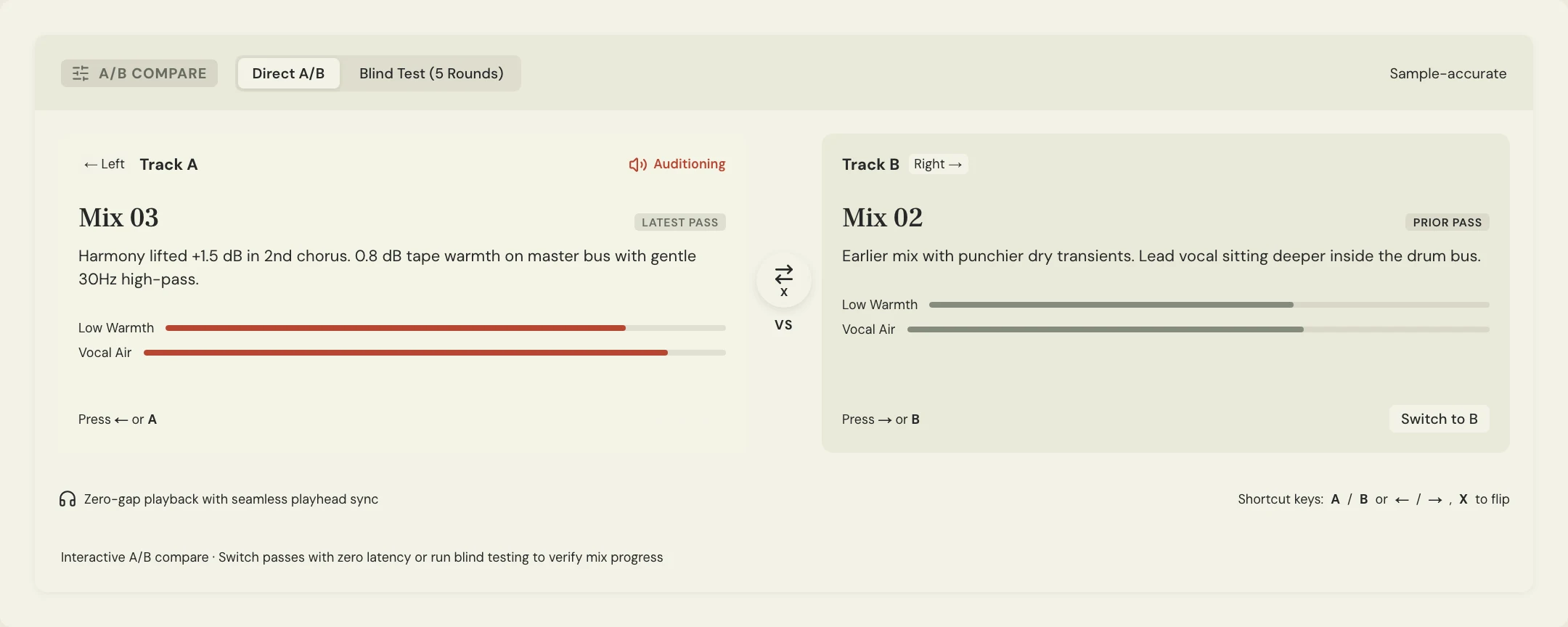
Ask the question that matches the stage. During arrangement, compare how the chorus arrives and which part carries the energy. During vocal production, compare closeness, phrasing, or layering. During mix review, listen to balance and tone at comparable playback levels.
A finished reference may be much louder than an unfinished demo. iZotope’s reference-track guidance recommends level matching for fair listening. Reduce the louder source for the comparison rather than assuming the demo needs every frequency boosted. Your aim is a meaningful comparison, not an identical waveform.
How do you keep references from taking over the song?
Return to the production brief after each comparison. If a borrowed characteristic distracts from the lyric or performance, change the reference or narrow its purpose. A reference is a communication tool, not proof that your song should follow another artist’s choices.
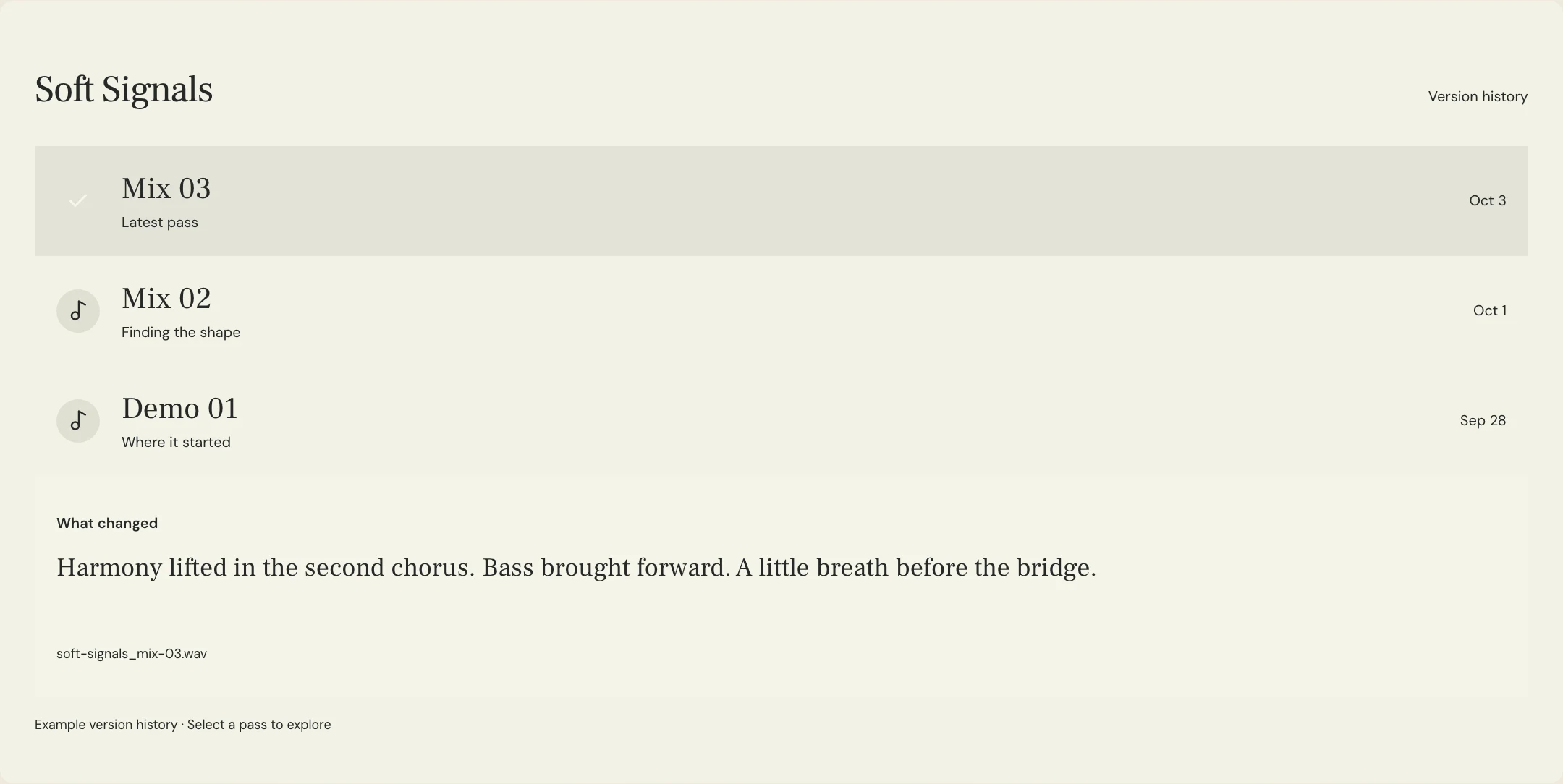
Keep the annotated list and decisions in the shared room, with the audio pass they informed. A new demo’s change note can say “Chorus widened; verse remains restrained.” That gives the artist a focused review task without reintroducing every reference on every round.
A few more things
Common questions
Can one song be my only reference?
Yes, if it explains the relevant direction clearly. Note which characteristics matter and which do not, so the producer does not interpret it as a request to copy the whole production.
Should references match my genre?
They can, but a reference from another genre may still communicate a useful vocal, rhythm, or arrangement idea. Explain the specific connection to your song.
Can I compare an unfinished demo to a mastered release?
Yes, with a focused question and similar listening levels. Do not expect an early demo to match the polish or loudness of a finished release.
Does using a reference mean copying another recording?
No. Use references to discuss musical effects and intentions. Create original parts, and obtain appropriate permissions for any actual material you intend to reuse.
Further reading
Technical background from the original sources referenced in this guide.
Your next pass
Give the song a shared home.
Keep the versions, lyrics, feedback, and people together in MixPass.