
The short answer
A music production brief should explain the song’s intended feeling, identify the current demo, and distinguish essential elements from ideas open to change. Add a few annotated references, practical recording constraints, and the next deliverable. Give the producer a musical goal they can interpret rather than a list of disconnected sounds to copy.
Keep these in mind
- Describe what the song should make a listener feel.
- Explain which parts of each reference matter.
- Separate creative essentials from experiments and practical constraints.
How do you explain a song’s production direction?
Start with the listener experience and the song’s point of view. “A late-night duet that feels close in the verses and opens up in the final chorus” gives a producer a direction. “Professional, warm, huge” is harder to translate because those words can describe very different arrangements.
Identify the current recording and what it demonstrates. A demo may establish the melody while its drum loop is only a placeholder. Tell the producer which choices are intentional before they build around a sound you never meant to keep.
What production brief template can you send?
Keep the brief short enough to discuss, but complete enough to prevent obvious misunderstandings. Use the template below to distinguish creative direction from deliverables and session logistics. Fill in only the constraints you actually know; the producer can help settle the others.
Do not turn every blank field into a hard requirement. A reference may suggest a direction while the artist and producer explore a more suitable solution. State your priorities so they know which parts of the brief are flexible.
SONG / DEMO: [Title and exact pass]
FEELING: [What the listener should experience]
POINT OF VIEW: [Who is speaking and what changes]
KEEP: [Essential lyric, melody, performance, or arrangement]
OPEN TO CHANGE: [Parts available for experimentation]
REFERENCES: [Track + timestamp + specific characteristic]
AVOID: [A sound or direction that would miss the goal]
RECORDING CONSTRAINTS: [People, location, equipment, schedule]
NEXT DELIVERABLE: [Arrangement demo, scratch vocal, or other pass]
NEXT DECISION: [What you will review together]
TARGET DATE: [Agreed handoff timing]
Copy or download, then fill in the details for your song.
What does a clear production brief look like in practice?
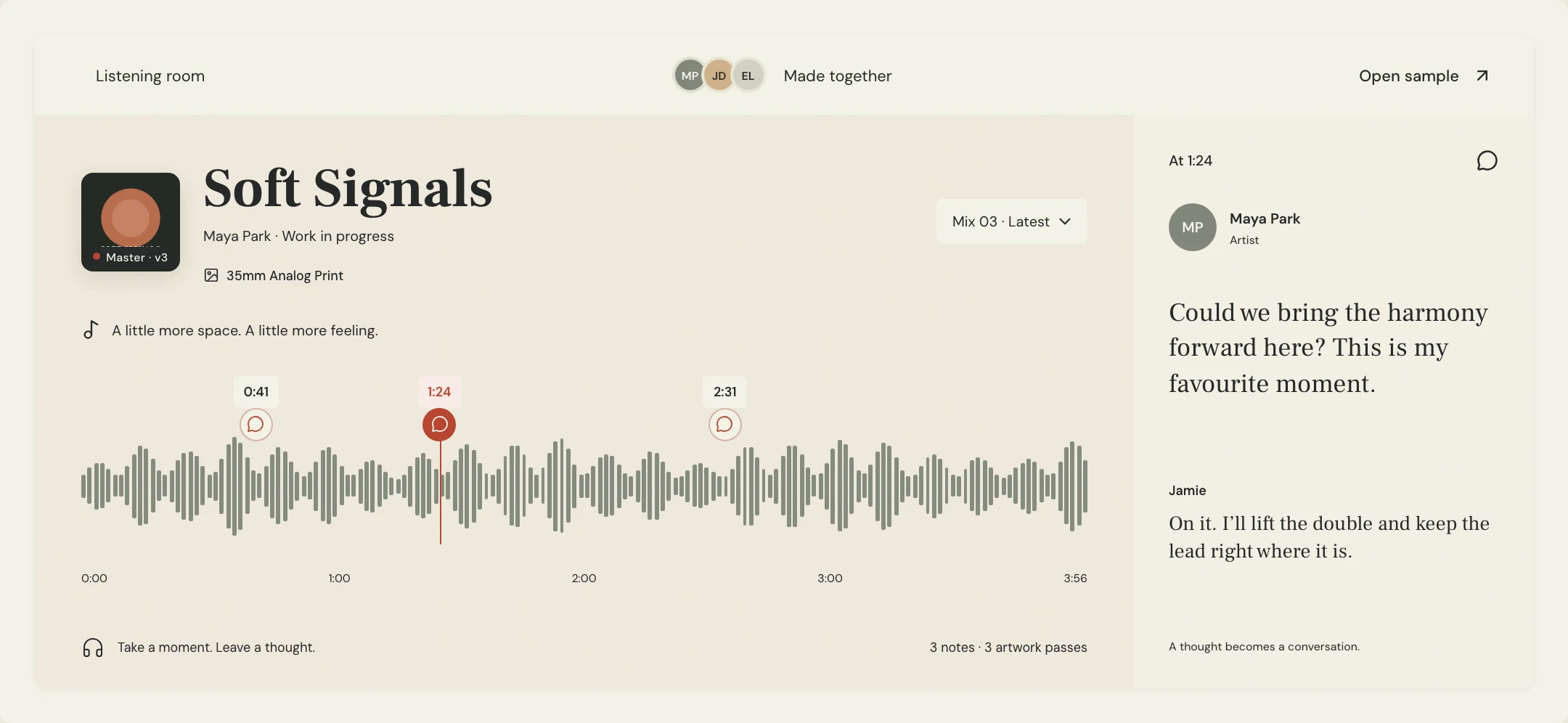
Constructed example: Maya’s Soft Signals brief asks for a close lead vocal, a restrained first verse, and a final chorus that feels more connected. She wants to preserve the lyric’s uncertainty and is open to replacing the demo drums. She references a song’s verse intimacy, not its entire arrangement.
Jamie can now propose two arrangement directions without guessing whether the original drums are sacred. Maya reviews the demos against the brief: which one supports the narrator and creates the intended last-chorus lift? The brief turns taste into a discussable musical goal.
How should the brief evolve during production?
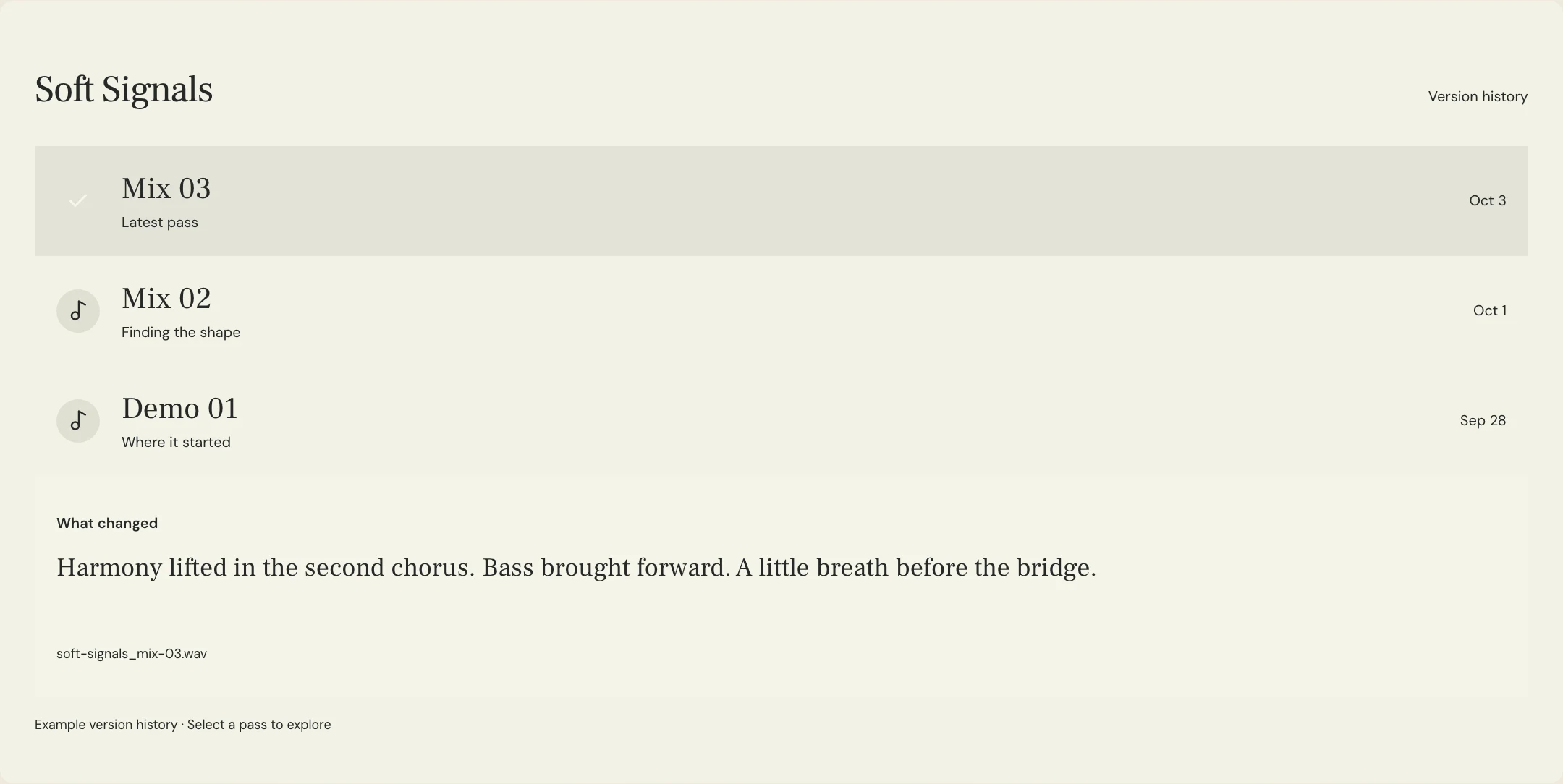
Keep a record of new decisions as the song develops. When an arrangement idea is approved, update what should be preserved in the next pass. If the artist changes the direction substantially, name that change before the producer treats it as another small revision.
In MixPass, add a change note to each audio pass and keep feedback with the version being reviewed. Use supporting files for references and scratch takes as appropriate. The brief guides the conversation; it does not replace the producer’s creative judgment or any separate commercial agreement.
A few more things
Common questions
How many reference tracks should a production brief include?
Use a small set you can explain clearly. Each reference should have a purpose, such as verse intimacy or drum movement, rather than adding another competing sound direction.
Should I describe exact instruments and plugins?
Name instruments or techniques when they are essential to the idea. Otherwise describe the musical effect you want and leave the producer room to choose an appropriate method.
What if I do not know the technical vocabulary?
Use plain listener language and point to examples. Explain what you feel, what should lead the section, and what you want to preserve.
Is a production brief a contract?
No. It organizes creative direction and practical expectations. Fees, rights, ownership, scope, and other commercial terms belong in a separate appropriate agreement.
Your next pass
Give the song a shared home.
Keep the versions, lyrics, feedback, and people together in MixPass.