
The short answer
A vocal harmony brief tells the singer which lead to follow, where each part enters and leaves, and what to record separately. Mark the words, name the guide for each line, and protect any passages that should stay solo. Ask for isolated parts and a rough blend to review in context.
Keep these in mind
- Name the lead pass and specify each phrase and part.
- Give singers a pitched guide where “high” or “low” would be ambiguous.
- Review an in-context blend and keep separate performances for the mix.
Which words and sections should the singer cover?
Choose the moments where a second voice changes the song. Start with one purpose per phrase: reinforce a lyric, lift the last line, answer the singer, or add a pad under an instrumental space. Put the exact words and a timestamp beside that decision. When the same lyric appears twice, name the section so the singer knows which occurrence to cover.
Use the current lead pass as the timing reference. Mark whether a harmony follows the lead all the way through the release or drops out earlier. A vague request for “harmonies on the chorus” can leave the whole chorus stacked when you only wanted the last word to open up. Mark intentionally empty sections on the sheet.
How do you distinguish a harmony from a double?
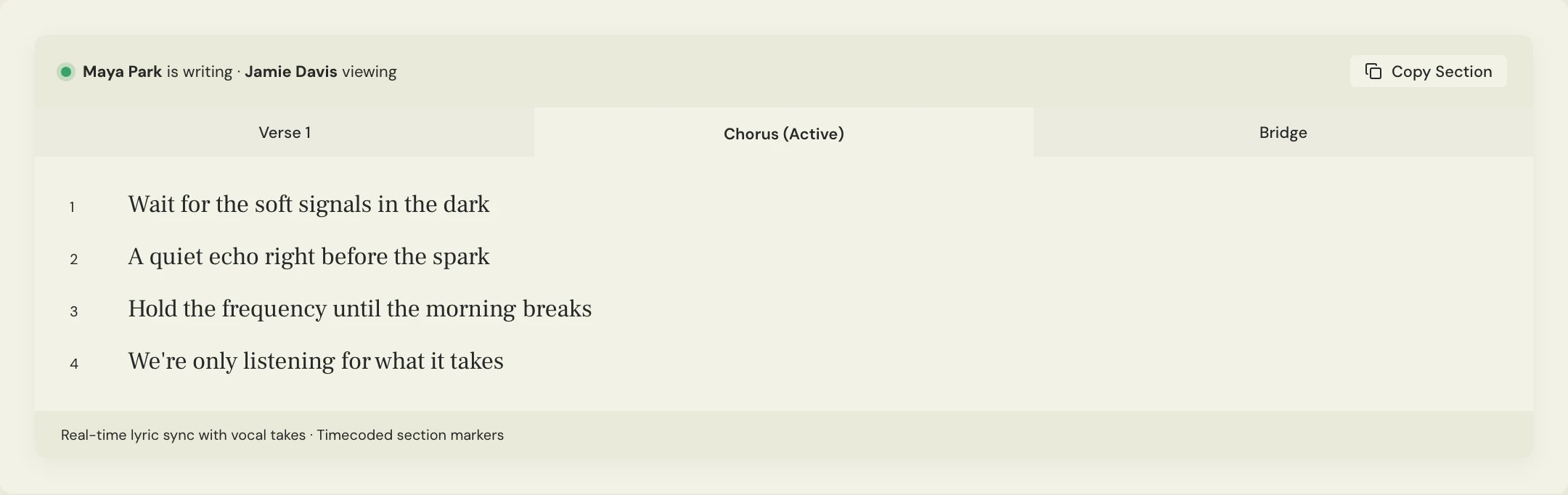
A unison double repeats the lead line in a separate performance. A harmony sings a different pitch line against it. A response or vowel pad may have a different rhythm or different words. iZotope describes separate recorded doubles, harmonies and ad-libs as options for supporting a lead. Label each part by what it does so the engineer can find and balance it later.
Send a sung or played guide when the pitch line matters. “High harmony” may leave several plausible notes, especially where the chord changes under a held word. Tell the singer which guide to follow and which sections should be interpreted freely. If the part is outside their comfortable range, audition another voicing together rather than treating the first sketch as fixed.
What can you paste into a vocal harmony request?
Constructed example: on the fictional Soft Signals track Lantern, Maya wants the last chorus to feel wider without losing the intimacy of its first line. She asks for a low harmony on the middle phrase and a separate high response after the last word. The original lead remains alone at the start, so the new entries have a clear reason to be there.
The singer records the low harmony against Lead 07 and sends it as its own file. A second independent take is requested only for the high response, so the mixer has another performance to place if needed. Yamaha describes how separately recorded parts allow independent balance and panning. Use distinct labels even when the same singer performs every part.
SONG: Lantern
FOLLOW: Lead 07 and Rough 09, same timeline
LEAVE SOLO: First line of the last chorus
LOW HARMONY: 2:34, “leave the light”; follow Low Guide 01 and release with the lead
HIGH RESPONSE: 2:41, wordless “ah” after the last word; follow High Guide 02
TAKES: One low harmony and two separate high response takes
RETURN: Aligned isolated takes and a rough blend over the lead
CHECK: Low harmony leaves the lyric clear; high response starts after the last word
APPROVER: Maya
Copy or download, then fill in the details for your song.
How do you review the returned parts before mixing?
Listen to the rough blend through the end of the chorus. Check the first word, any long shared syllable and the release of the phrase. If the lead becomes harder to understand, listen to the isolated parts to see whether a late consonant, a competing pitch or an extra layer is responsible. Ask for a specific change and audition it in the blend again.
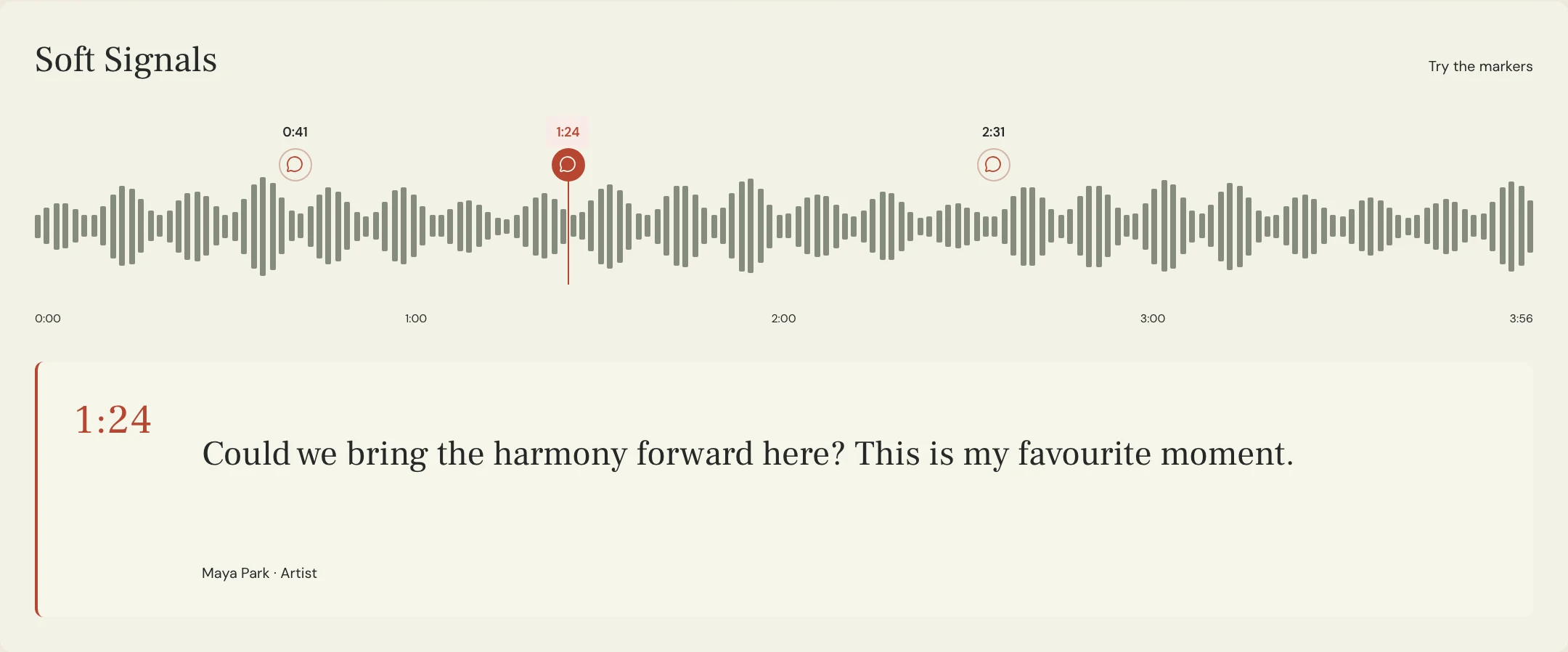
MixPass can hold the named listening pass and feedback tied to the relevant point in playback. Reference the exact part and phrase in the note, then agree which take names will go to mixing. The singer and engineer record and align the individual parts in their audio software.
A few more things
Common questions
Should I send the lead solo or in the mix?
When possible, send both an identifiable lead and a rough mix with the same timing. The singer can hear the words alone and check the part against the arrangement.
What if I only want certain words doubled?
Write the exact words, entry and release for each double, and mark which neighboring words should stay solo.
Can the harmony use a different vowel?
Yes, when that is the intention. Spell out the vowel or provide a sung example so the singer knows how to approach it.
Why ask for isolated tracks and a blend?
The blend lets the team judge the arrangement. The isolated tracks let the mixer balance or edit each part independently.
Further reading
Technical background from the original sources referenced in this guide.
Your next pass
Give the song a shared home.
Keep the versions, lyrics, feedback, and people together in MixPass.
Building an upcoming single or EP? Apply for the Founding Testers Program for 3 months of Pro free in exchange for feedback (50 early seats).