
The short answer
To request a vocal pickup, name the exact listening pass, identify the phrase to replace, and explain the change you need. Send the agreed lyric and backing track, enough lead-in for the singer to perform naturally, and clear return-file instructions. Check a short test against the existing vocal before recording the full request.
Keep these in mind
- Agree whether the issue calls for another performance before booking a retake.
- Keep the approved surrounding phrases available so the singer can hear the intended delivery.
- Retain the current vocal comp until the replacement has been checked in the song.
When does a vocal note need a pickup?
A pickup is a new recording of a selected passage after an earlier performance has been reviewed. Start by identifying the problem: an incorrect word, a rushed ending, an unwanted sound, or a phrase whose delivery does not fit the song. Describe the audible result you want. “Let the last word settle with the band” gives the singer more direction than “better feel.”
Ask the producer or engineer whether the issue can be addressed with the existing material before requesting another session. They may already have a suitable alternate, or the concern may be an arrangement or mix decision. When a new performance is needed, distinguish a required correction from an experiment so the singer understands the purpose of each take.
| Observation | Question before recording | Possible pickup direction |
|---|---|---|
| A word differs from the agreed lyric | Is the lyric revision confirmed? | Record the full affected phrase with the approved words |
| A phrase ending feels rushed | Is the timing choice intentional? | Try a more settled ending while keeping the entrance |
| An unwanted noise overlaps the vocal | Is there a usable alternate? | Retake enough surrounding material to give the editor options |
How do you identify the exact phrase the singer should replace?
Name the pass being reviewed and include both the audible words and a location within that version. A timestamp without a version can become ambiguous when a new introduction or arrangement shifts the song. Where useful, include the section name and bar reference as well. Say whether the request concerns the lead, a double, a harmony, or an ad-lib.
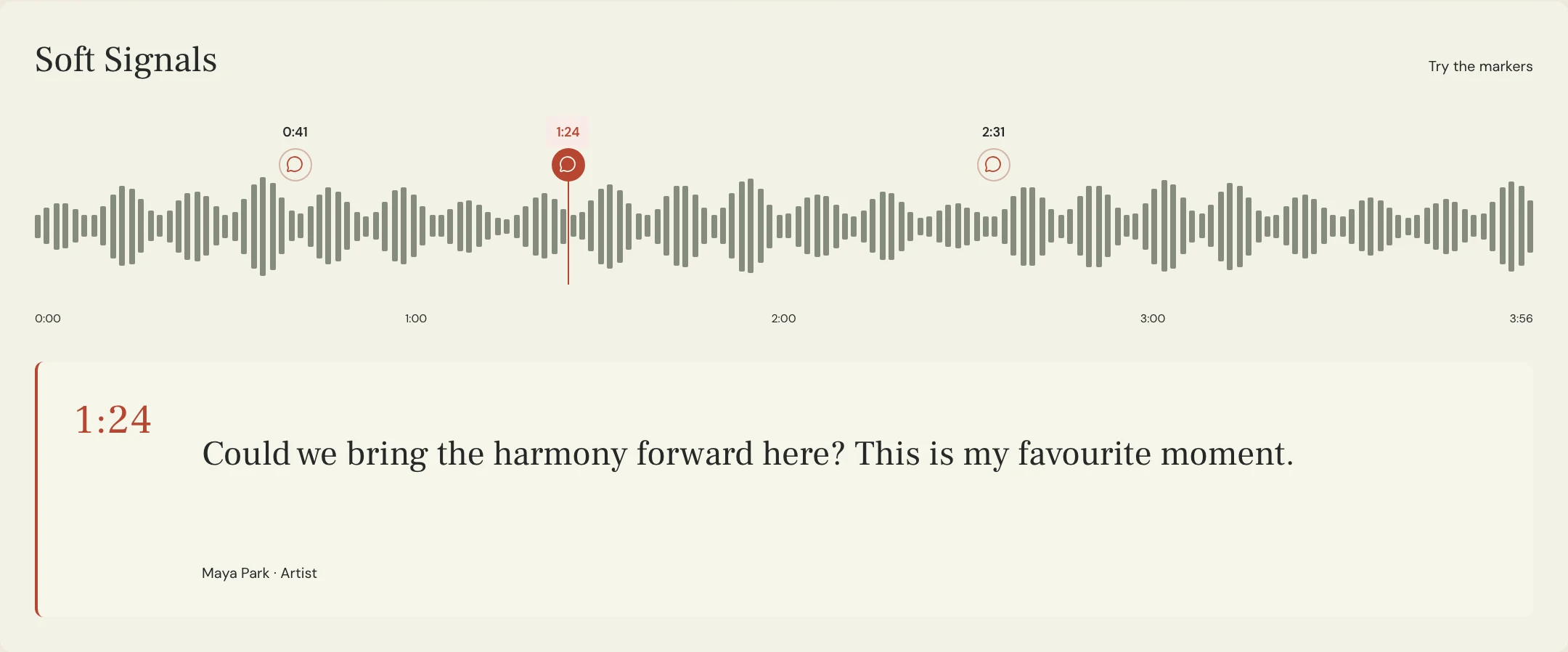
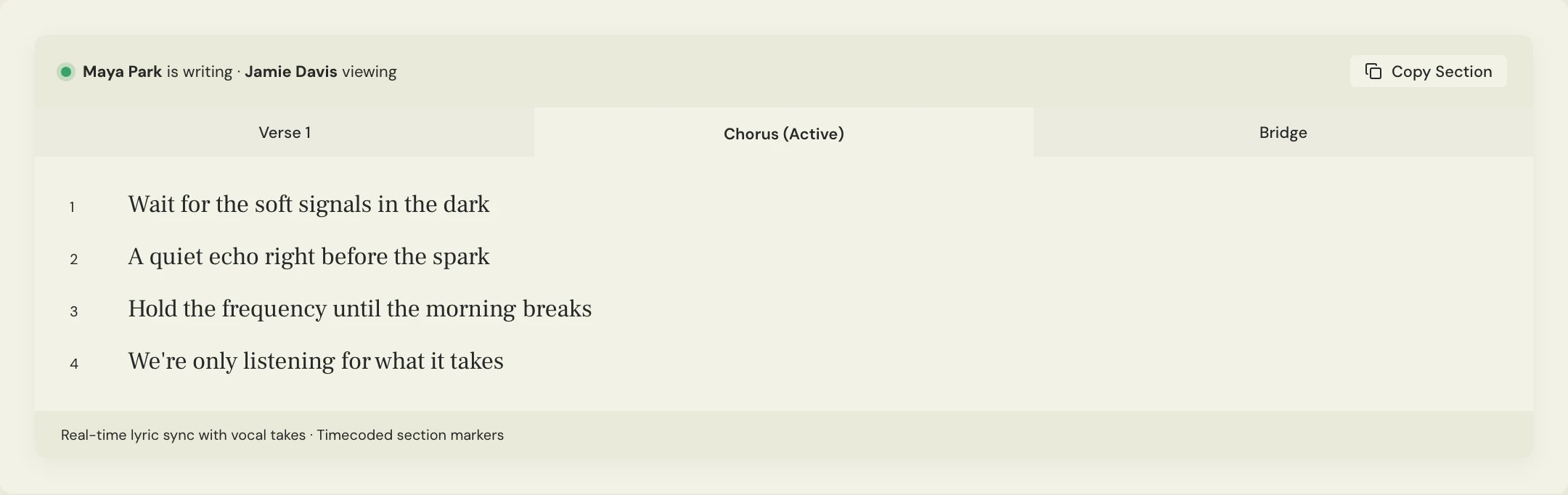
Use a timestamped MixPass comment to locate the passage on the listening bounce, then include the exact lyric in the request. The shared lyric sheet can hold the current words, but confirm which revision the vocalist should use. Do not assume an audio upload created a matching lyric snapshot. Send the agreed backing separately and clearly identify any differences from the reviewed bounce.
What should the singer check before recording a pickup?
Where continuity matters, compare the new setup with the earlier session: microphone, placement, room, recording chain, and monitoring. Shure’s microphone guide explains how placement affects tonal balance and the contribution of the room. A short test heard beside the existing vocal is more useful than assuming that the same microphone model will recreate the same sound.
Give the singer musical context before the replacement passage and room to finish it. Agree with the recording engineer where recording should begin and end, including any surrounding words or breaths they need for the edit. Ableton’s recording manual, for example, describes separate punch-in and punch-out controls and a pre-roll period; the exact recording method belongs to the DAW being used. MixPass provides the listening and discussion context while recording happens in that software.
What vocal pickup request template can you copy?
Constructed example: the fictional Soft Signals team wants the last word of a chorus line to feel less hurried. Maya will sing the whole line again, preserving its entrance and intimate tone. The producer supplies the selected listening bounce and the matching instrumental, then asks for a test before the remaining takes. The brief leaves the number of final takes to agreement between the people recording.
Keep one request per clearly labeled item. If the artist also wants an exploratory harmony, put that in a separate item rather than attaching it to a mandatory lead correction. Include a contact who can resolve questions and a review point so the singer knows when the producer will listen. State any processing and file-alignment requirements explicitly instead of inheriting assumptions from an older session.
SONG: Soft Signals
REQUEST: Lead pickup, chorus ending
PASS REVIEWED: Vocal review 03
LOCATION IN THAT PASS: 1:24, second chorus
WORDS: "Wait until the windows glow"
REASON: The last word arrives earlier than the intended phrase ending.
DIRECTION: Keep the entrance and intimate tone; let the final word settle.
BACKING TO USE: soft-signals_instrumental_arrangement-04.wav
LYRIC REVISION: 03, confirmed for this request
RECORDING EXTENT: Whole line plus agreed surrounding context
TEST FIRST: Send one short attempt beside the existing vocal before continuing.
RETURN FILES: [Agreed file format, processing, alignment, and take labels]
KEEP UNCHANGED: Verse vocal and existing chorus entrance
QUESTIONS / REVIEW: [Producer contact and agreed review point]
Copy or download, then fill in the details for your song.
How do you review the replacement before updating the vocal comp?
Listen through the surrounding section, then compare the new phrase with the earlier performance. Check the requested change, the transition into and out of the pickup, lyric accuracy, and any distracting difference in tone or recording ambience. A replacement can solve the original timing concern and still need another decision about how it joins the existing take.
Keep the working files clearly labeled and upload a new listening pass when the producer has assembled a candidate edit. Note which request it addresses and which version listeners should review. Record any remaining issue as a specific follow-up, then confirm the selected result. Preserve the earlier comp and source recordings so a later arrangement decision does not force the team to reconstruct the handoff.
A few more things
Common questions
How many pickup takes should the singer send?
Agree on the needed choices with the producer. A named preferred attempt and a small, clearly labeled set of alternatives can make review manageable. The right number depends on the performance question rather than a universal take count.
What if the original microphone is unavailable?
Explain the change before the session. Compare a short test with the existing vocal and decide whether the new sound fits, whether more of the passage should be replaced, or whether the recording needs a different plan.
Does a lyric correction also affect doubles and harmonies?
Check every part that sings the changed words. List affected layers separately and confirm which ones need new recordings. A corrected lead can otherwise leave an older lyric audible in a supporting vocal.
What if the vocalist cannot return before the review date?
Tell the team which decision remains unresolved and agree on the next review point. Label any temporary edit or guide clearly so another collaborator does not mistake it for the approved final performance.
Further reading
Technical background from the original sources referenced in this guide.
Your next pass
Give the song a shared home.
Keep the versions, lyrics, feedback, and people together in MixPass.