
The short answer
A useful lyric sheet identifies the song, the lyric revision, and the demo it matches, then separates each song section with a clear heading. Put one sung phrase on each line, write intentional repeats explicitly, and keep alternatives outside the performance copy. Add pronunciation or delivery notes only where the vocalist needs them.
Keep these in mind
- Label the lyric revision and matching demo at the top.
- Separate the working sheet from the vocalist’s performance copy.
- Use section headings and line breaks that follow the song.
What belongs at the top of a song lyric sheet?
Include the title, revision label, date, and matching demo. If key and tempo are known and useful for the session, include them too. List writers for context, while keeping any formal credit or ownership agreement in its appropriate separate record.
The most important field is the version reference. “Soft Signals, lyric revision 03, matching Vocal demo 02” tells the vocalist which words belong to the recording. A date alone may be ambiguous when several people send edits on the same day.
What lyric sheet template can you copy?
Use the template below as a starting point and remove sections the song does not use. These blank fields are intentional: fill them with your project’s facts rather than treating the example tempo or structure as a requirement. Write out changes in a repeated section so the vocalist does not have to remember exceptions.
Keep a separate working copy if you are still choosing between lines. Once you send the sheet for recording, label it as the agreed performance lyric. If another edit arrives, issue a new revision and tell the vocalist exactly which lines changed.
TITLE: [Song title]
LYRIC REVISION: [Label and date]
MATCHING DEMO: [Exact pass name]
WRITERS: [Names]
KEY / TEMPO: [If agreed]

VERSE 1
[One sung phrase per line]

PRE-CHORUS
[Words]

CHORUS
[Words, including intentional repeats]

VERSE 2
[Words]

BRIDGE
[Words]

LAST CHORUS / OUTRO
[Write changed lines explicitly]

PERFORMANCE NOTES
[Pronunciation, entrances, or intentional phrasing]

WORKING ALTERNATIVES
[Keep outside the agreed performance copy]
Copy or download, then fill in the details for your song.
How do you turn a working lyric into a recording copy?
Constructed example: the writers of Soft Signals have three possible chorus endings. Their working sheet keeps those alternatives together with the question “Which line makes the last chorus feel resolved?” After listening to the demos, they choose one and remove the others from the vocalist’s copy.
The handoff note says: “Lyric revision 03 matches Chorus demo B. The last line changes only in the final chorus.” That is more reliable than sending a screenshot of a paragraph and asking the vocalist to remember which lines were approved.
- Confirm each section appears in the same order as the demo.
- Check that the first word of every changed line is easy to identify.
- Spell unfamiliar names phonetically where helpful.
- Separate ad-libs and backing vocals from the lead lyric.
- Read the sheet while playing the matching demo from beginning to end.
How can you keep lyrics with the recorded song?
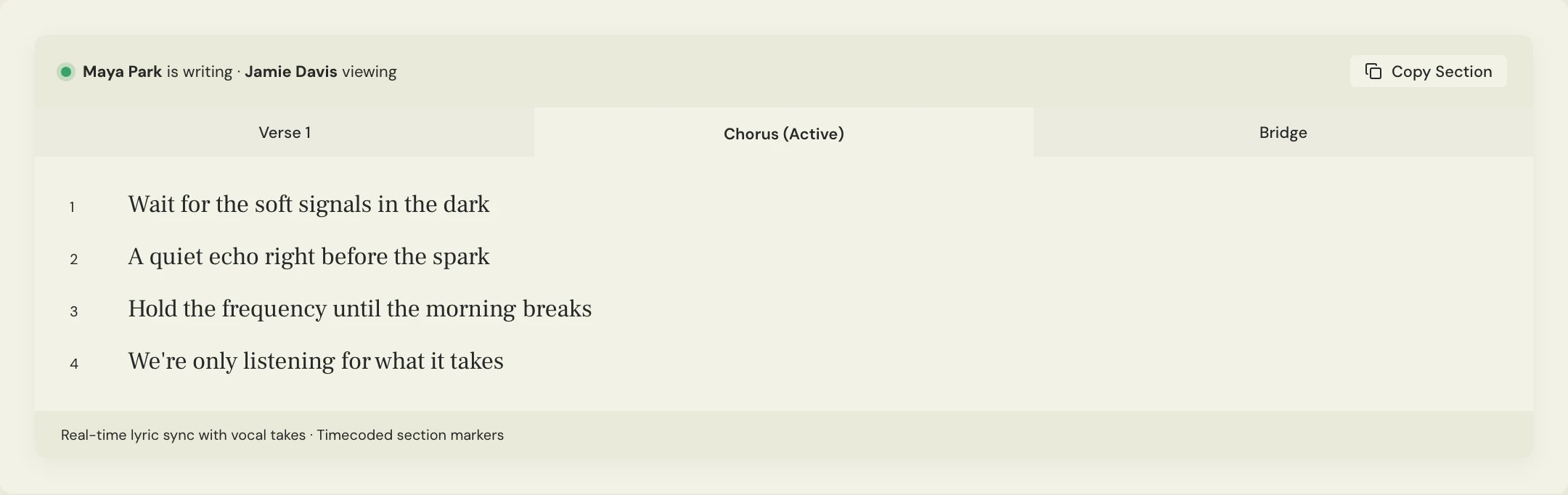
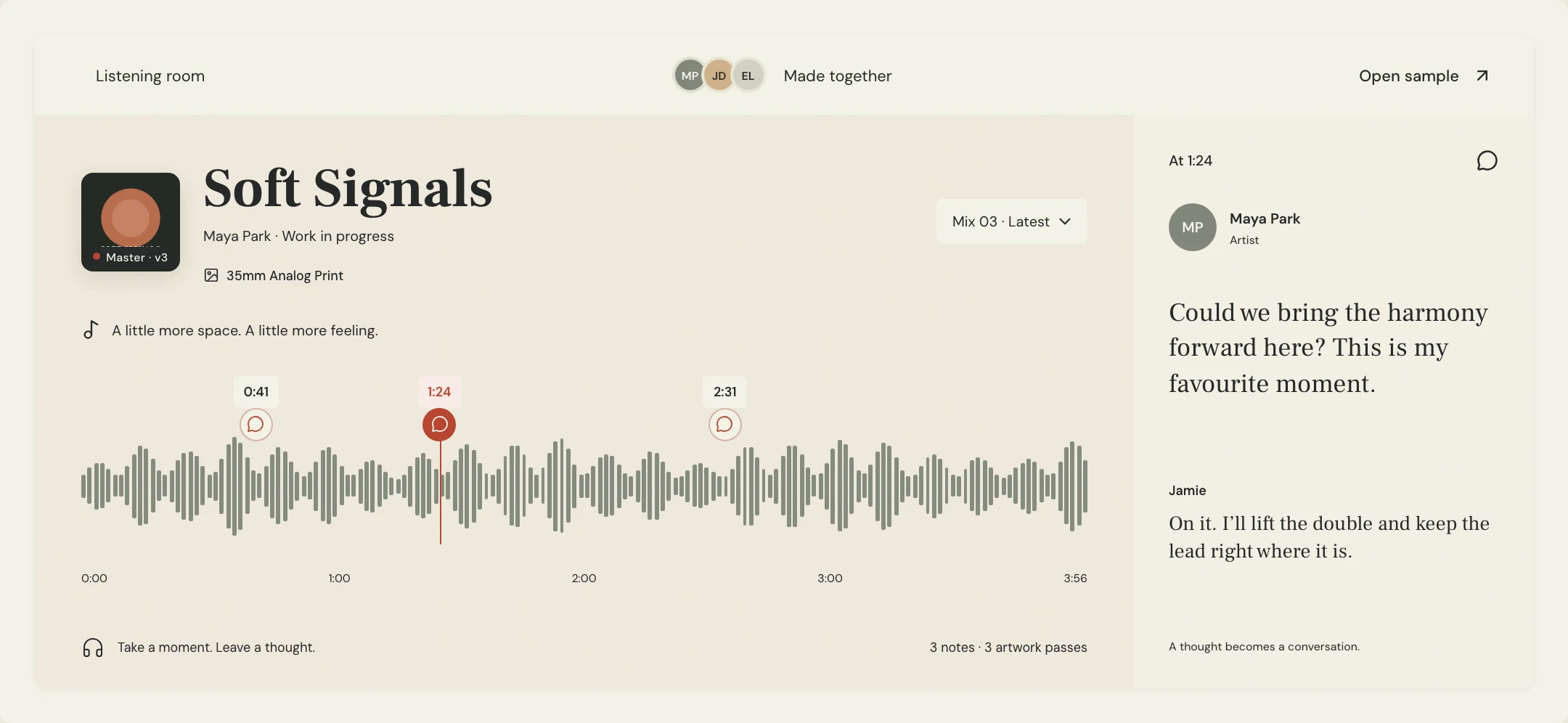
Use MixPass’s lyrics pad for the current working sections and the room’s conversation for decisions about them. Copy the agreed words into a labeled performance document when needed. The source sheet should remain understandable to someone joining the session later.
When a new vocal pass arrives, add a note about the lyric revision it uses. If the singer intentionally changes a word or repeat, update the agreed sheet after the writers confirm it. Keeping both records consistent helps the next person avoid rehearsing an outdated line.
A few more things
Common questions
Should lyric sheets use musical notation?
Use notation when it helps your collaborators, but a simple lyric sheet can work without it. Record the melody in a matching demo and add entrances or phrasing notes where the words alone are ambiguous.
Can I write “repeat chorus” instead of writing it again?
You can when the section is identical and everyone understands it. Write out changed words, repetitions, or ad-libs in the last chorus so the performer does not have to guess.
Where should alternate lines go?
Keep them in a clearly marked working area or separate version. Remove them from the agreed performance copy before recording.
Is this template a songwriting agreement?
No. It organizes the words and session context. Writing credits, ownership, permissions, and commercial terms need their own appropriate agreement.
Your next pass
Give the song a shared home.
Keep the versions, lyrics, feedback, and people together in MixPass.