
The short answer
To request a vocal double, identify the lead take and the words to sing again in unison. Mark the entrances, consonants and note releases that should match, along with any places where you want a looser feel. Ask for a short test and hear it against the lead before recording the remaining sections.
Keep these in mind
- Give the singer the exact lead performance and lyric revision.
- Mark where the double starts, stops and needs a close rhythmic match.
- Review the take alone, paired with the lead and inside the mix.
Which lead should the singer double?
Choose the lead performance that will anchor the next recording. Send a reference with that lead audible and identify its filename or listening pass. If a comp, tuning pass or lyric change is still pending, tell the singer which version to follow and what may change. The double will be easier to judge when everyone is listening to the same phrasing.
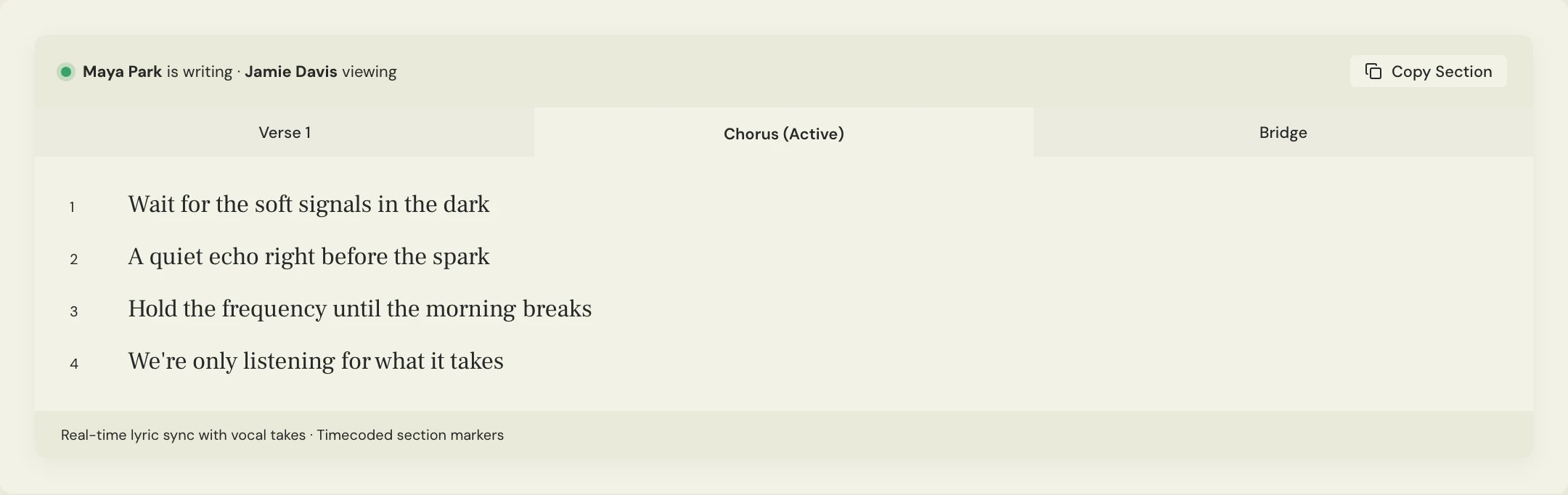
Mark the exact words to double on the current lyric sheet. You might want an entire chorus, the last phrase of a verse or one hook word. Include the first and last word and whether the final vowel should sustain or release. iZotope describes manual doubling as a new performance that follows the original in pitch and phrasing. Use those two qualities to define the first test.
Which details should match closely?
Play the phrase slowly enough to notice the shape of each word. Mark the first consonant, any fast run of syllables and the last release. If the lead sings through a word boundary, ask the singer to follow that connection. A double with a late T or an extra breath can draw attention even when its pitch is close to the lead.
Describe the amount of looseness you want. A chorus can benefit from a close opening and a more open held ending. The singer needs to know which details are fixed and which can vary between performances. Give them a short lead-in and the following line so they can hear the phrase as part of the song. Use the remote vocal checklist to agree on the recording setup and return files.
What can you paste into a vocal double request?
Constructed example for the fictional Soft Signals track Lantern. Maya wants a unison double on the second chorus. The opening “stay” should land with the lead, while the final “home” can have a little movement in its held vowel. Both voices should release before the next line. The short breath between the phrases belongs to the lead.
The producer requests the chorus as a test with a dry isolated recording and a listening bounce against the selected lead. Both files use the agreed start point. Before the singer records the final chorus, they review whether the double adds the intended thickness and whether the ends of the words remain clear.
SONG / LEAD | Lantern / Lead Comp 05
LYRIC REVISION | Lyrics 03
SECTION | Second chorus, “stay” through the end of “home”
MATCH CLOSELY | Opening S, fast words in line two, release before the next entrance
ALLOW MOVEMENT | Held vowel in “home”
BREATH | Leave the gap for the lead’s breath
FIRST RETURN | One chorus as dry isolated audio plus a reference with the lead
ALIGNMENT / FORMAT | Confirm the shared start and recording format with the producer
APPROVAL | Double adds thickness, lyric stays clear, endings agree
Copy or download, then fill in the details for your song.
How do you check the double before approving it?
Listen to the isolated take first to check that the requested words and note lengths are present. Pair it with the lead and replay the marked consonants and releases. Then return to the full mix. A small difference can provide the character you wanted, while an obvious doubled consonant can make the lyric feel rushed or blurred.
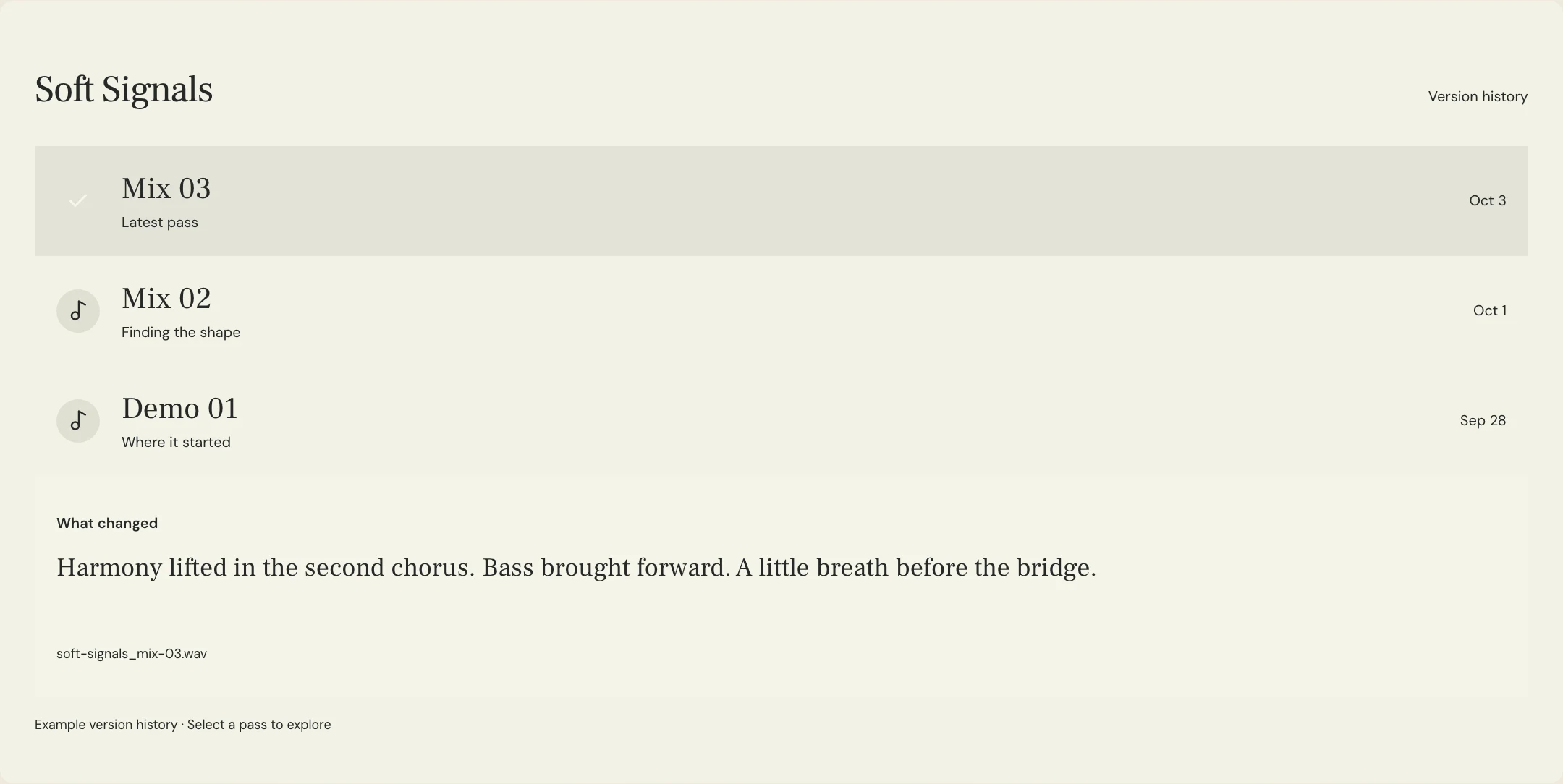
Upload the listening result as a new labeled MixPass pass and put a note on the moment that needs attention. If the take needs another attempt, describe the word and the intended shape. Keep the lead reference identifiable and confirm which double was approved. If you are choosing among several lead takes, complete that decision with the comp review before asking for further matching work.
A few more things
Common questions
Can I double only one word?
Yes. Name the word and identify whether its consonant, vowel and release should follow the lead. Include the surrounding phrase in the review.
What if the double makes the lyric blurry?
Check the starts of consonants, fast syllables and releases with the lead. Mark a specific word for the singer or editor to revisit.
Do I need several doubles?
Start with the texture the song needs and agree on the number of performances. A short test can show whether one additional take is enough.
Should the singer hear the lead while recording?
Provide a cue where the singer can hear the phrasing they need to match. Adjust the monitoring balance so they can also hear their own performance comfortably.
Further reading
Technical background from the original sources referenced in this guide.
Your next pass
Give the song a shared home.
Keep the versions, lyrics, feedback, and people together in MixPass.
Building an upcoming single or EP? Apply for the Founding Testers Program for 3 months of Pro free in exchange for feedback (50 early seats).