
The short answer
To request a vocal delay throw, identify the mix pass, timestamp and word you want echoed. Say what the repeats should do in the space after the word and which next entrance must stay clear. Ask for a new pass with enough lead-in and tail to hear the effect in context.
Keep these in mind
- Name the exact word and identify the take, pass or section where it occurs.
- Describe the role of the echo and the entrance its tail must leave clear.
- Compare the whole transition in the original and returned passes.
Which word should trigger the delay?
Listen to the current mix and find the exact syllable. A throw sends a selected word or phrase into a delay so its repeats extend into the following space. If the lyric comes back in several choruses, give the section and pass timestamp so the engineer can distinguish the instance you want. Mark the start of the word, then name it in the note.
Describe the job the echo should do. You might want an answer to a short line, a hint of movement behind the lead or a bridge into the next section. Waves’ vocal delay guide describes picking a word or phrase with room after it. iZotope shows how a throw can create anticipation before a chorus. Start with one spot where you can hear the effect serve the arrangement.
How should the repeats fit before the next entrance?
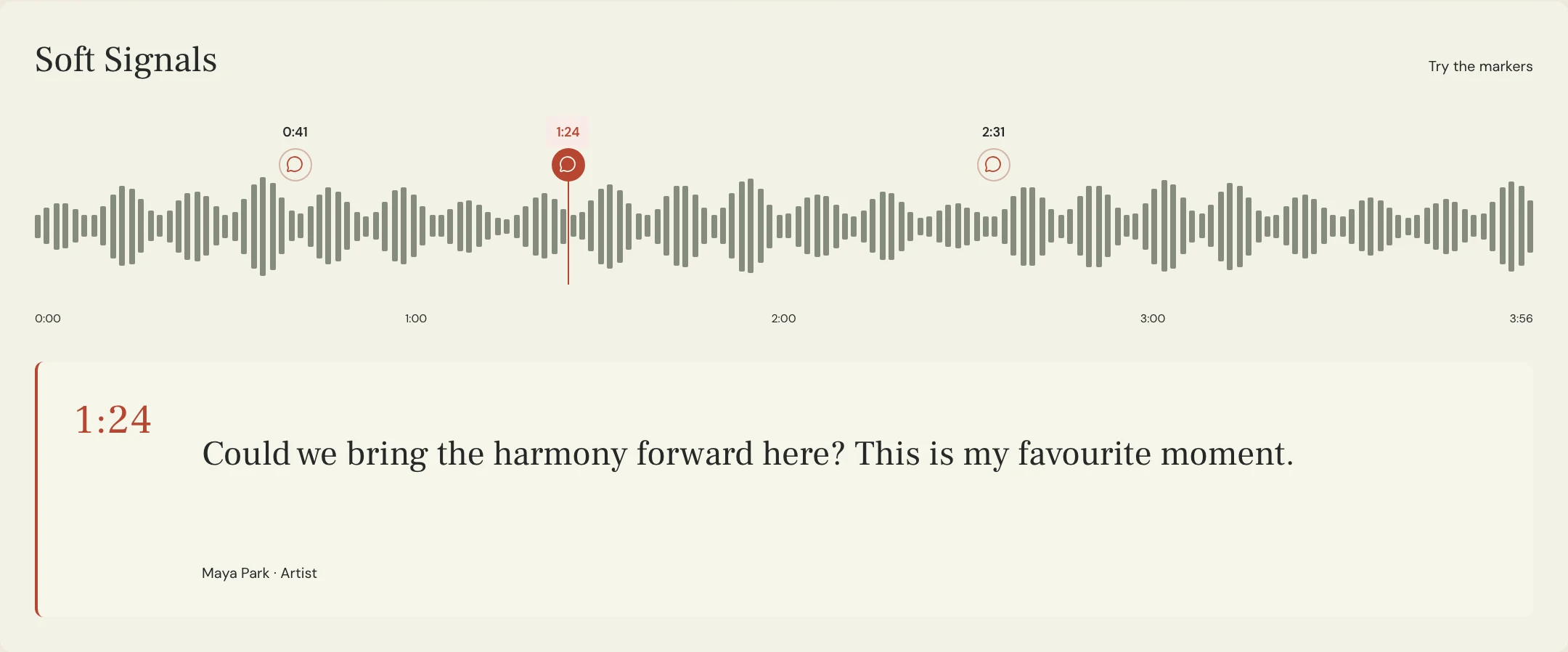
Listen from the word through the next important vocal or instrument entrance. Say whether the repeats should fill the gap, fade underneath the pickup or make a brief accent. If you can count where the first repeat should land, mark the beat. Otherwise, give the engineer an audible cue such as after the snare or clear by the first syllable of the chorus.
Separate the level of the lead from the level of the echo. A clear lead can sit in front of a softer or darker return, while a repeat meant as a hook can come forward briefly. If the next line loses definition, ask for a quieter or shorter tail first. Test one change at a time so the engineer and artist can hear which part of the request helped.
What can you paste into a vocal delay request?
Constructed example: on the fictional Soft Signals song Lantern, Maya sings “home” at 1:36 in Mix 09. The production opens up for two beats before the harmony enters. She asks for the vowel to echo into that gap and fade below the entrance. The same word appears again in the next chorus, where she wants the existing treatment to stay.
Fill in the timing from the version the engineer will hear. If you send a reference track, point to the specific moment and explain what to borrow from it. The reference may have a different tempo or a bigger gap, so describe the effect on your song as well. The reference tracks guide covers how to make that note clear.
SONG AND PASS: Lantern | Mix 09
TRIGGER: 1:36, bridge, vowel in “home”
PURPOSE: Give the end of the line a quiet answer in the two-beat gap
RHYTHM: First repeat should feel connected to the groove; try it in context
PROTECT: Keep the harmony entrance at 1:38 readable; leave the next chorus treatment as it is
RETURN: Named full-song pass with this change identified
APPROVAL: The repeat is audible in the gap and recedes as the harmony enters
Copy or download, then fill in the details for your song.
How do you approve the new delay throw?
Play a few seconds before the word and continue past the next entrance. Check that the throw catches the intended sound, settles at the right point and leaves the dry line legible. Listen again without watching the playhead. A repeat that seems obvious during a short loop may disappear in context, and a tail you liked in isolation can crowd the next phrase.
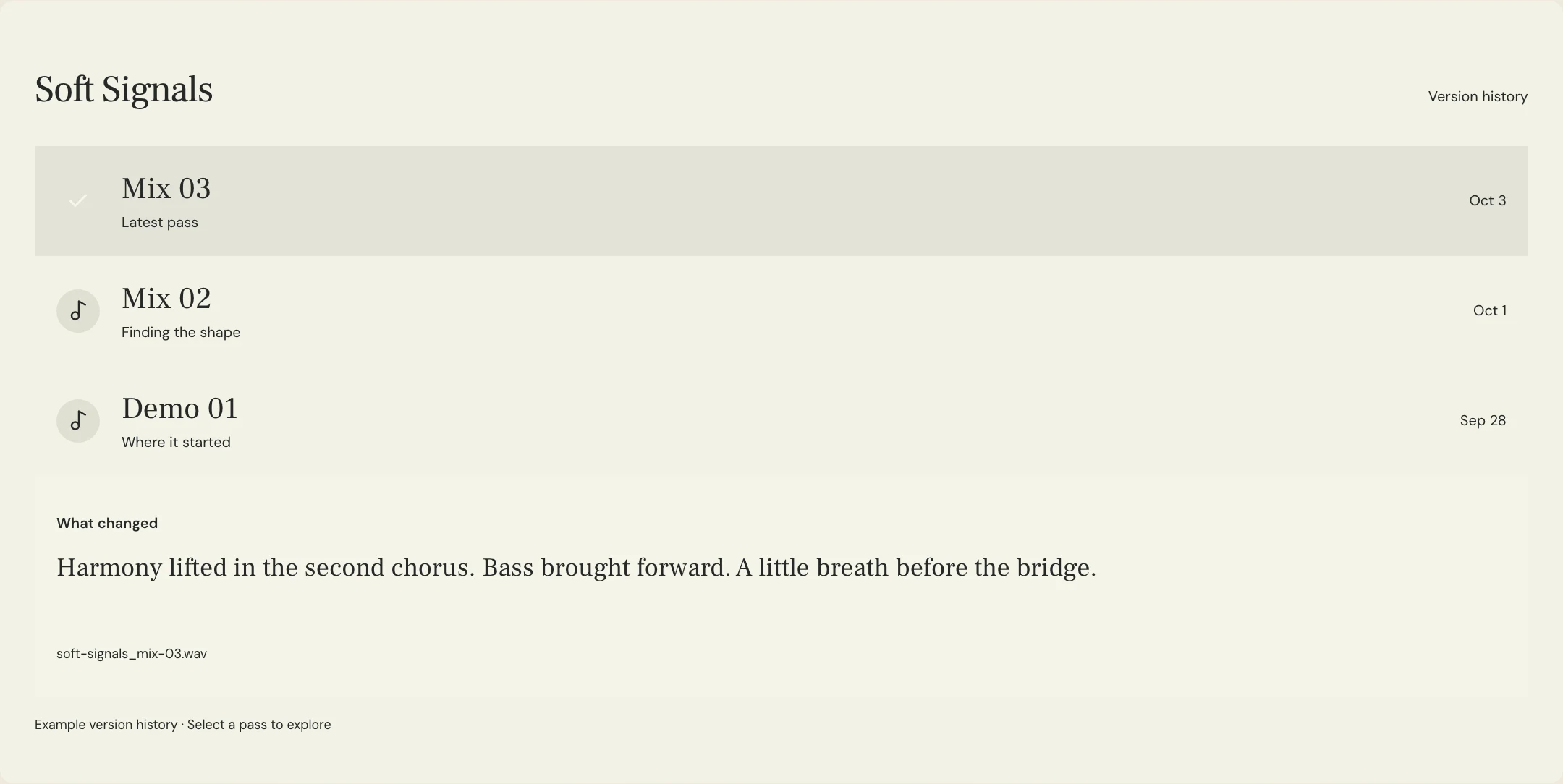
Leave the original observation on the exact MixPass listening pass and ask for a new labeled pass with a note about the change. During review, identify the returned pass and compare the transition with the original at a comparable listening level. If the throw works and you hear a separate problem, give it its own revision note so the approved effect stays clear.
A few more things
Common questions
Do I need to choose a delay note value?
Choose one if you have a specific rhythm in mind. Otherwise describe the first repeat in musical context and the entrance the tail must leave clear.
Can I request a throw on just one syllable?
Yes. Give the word, syllable and location. Listen for whether the isolated sound still makes sense when it repeats.
What if the repeat sounds right but obscures the next line?
Point to the affected line and ask the engineer to try a shorter or quieter tail. Check the whole transition again.
Should I ask for a full mix or a short preview?
A short preview can work if it contains the lead-in, target word and following entrance. Use the named full pass for final review.
Further reading
Technical background from the original sources referenced in this guide.
Your next pass
Give the song a shared home.
Keep the versions, lyrics, feedback, and people together in MixPass.
Building an upcoming single or EP? Apply for the Founding Testers Program for 3 months of Pro free in exchange for feedback (50 early seats).