
The short answer
A mastering brief should identify the approved mix, describe the sonic priorities you want preserved, and explain the release context. Include annotated references, any album sequence or transition needs, the required deliverables, and an approval contact. Confirm file specifications with the engineer and release destination instead of assuming one format or loudness target fits every project.
Keep these in mind
- The approved mix filename is the mastering starting point.
- References should describe overall character rather than reopen production.
- Agree on deliverables and who approves them before the session.
What should a mastering brief communicate?
Explain the broad listening goal: a restrained dynamic song, a dense energetic release, or an album whose songs need to feel connected. Tell the engineer which qualities of the approved mix matter most. If the close vocal or transient drum feel is essential, make that part of the brief.
Identify unresolved issues honestly. A mastering brief should not quietly ask the engineer to solve an unfinished arrangement or replace a performance. When a concern needs access to individual parts, discuss the correct stage before sending the project forward.
What mastering brief template can you copy?
Fill in the known facts and ask the engineer to confirm the remaining requirements. The template separates sonic intent from release logistics so a collaborator can review both. For multiple songs, attach an exact version and sequence inventory.
Use references as context, with the characteristic you mean written beside each link. iZotope’s mastering-reference guidance focuses on the broad sound of the release. Your brief should explain what matters for this song rather than asking for an exact copy of another recording.
PROJECT: [Single / EP / album title]
APPROVED MIXES: [Exact filenames and versions]
SONIC PRIORITIES: [What should be preserved]
CONCERNS: [Specific issues to discuss]
REFERENCES: [Track / link / characteristic]
SEQUENCE: [Track order and any transition intentions]
RELEASE DESTINATIONS: [Digital / physical / other agreed use]
DELIVERABLES: [Main master and required alternates]
FILE SPECIFICATIONS: [Confirm with engineer and destination]
SONG TITLES / VERSION LABELS: [Agreed names]
APPROVAL CONTACT: [Responsible person]
TIMING: [Review and delivery dates]
Copy or download, then fill in the details for your song.
What does a useful mastering brief look like?
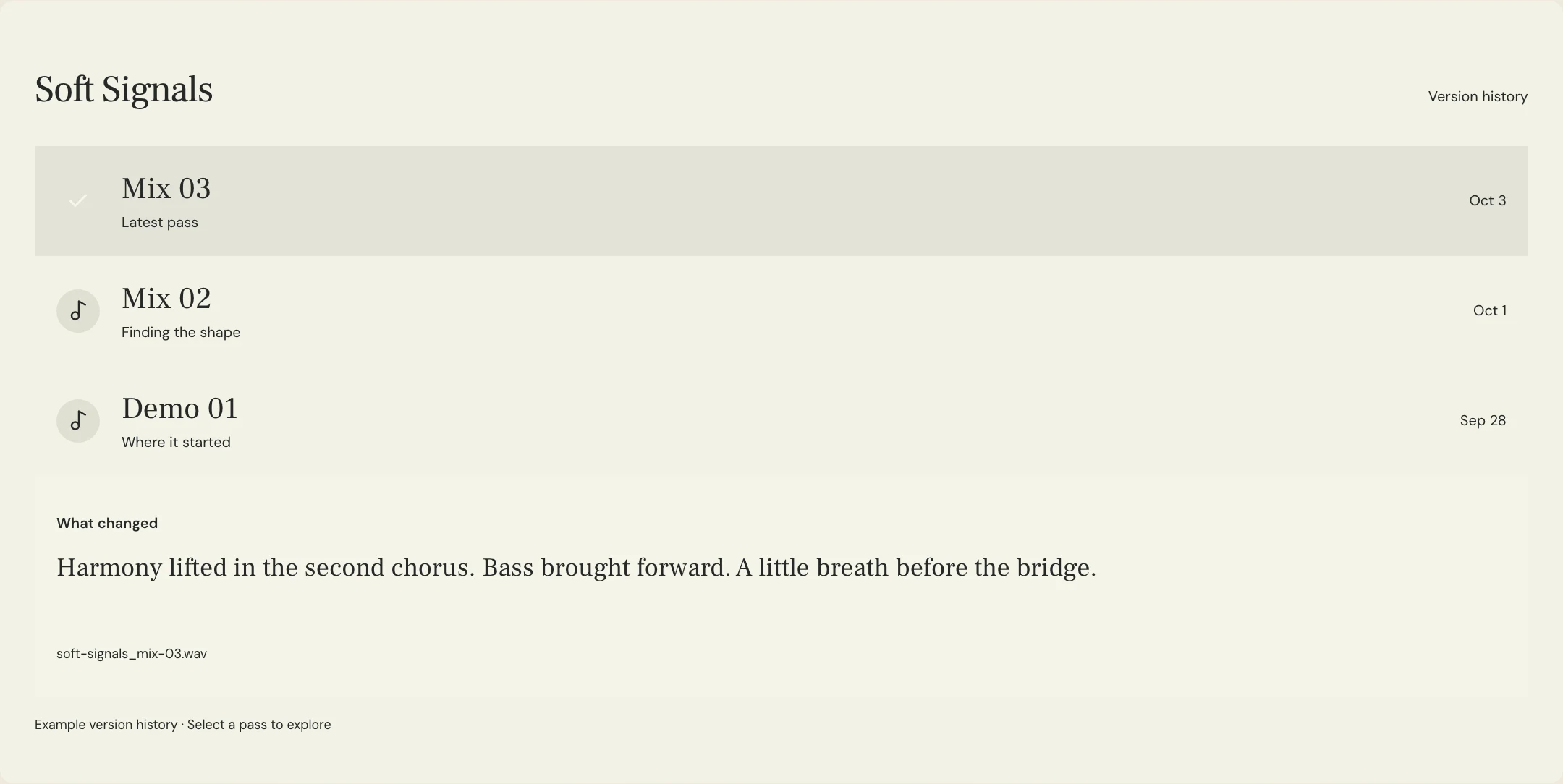
Constructed example: Soft Signals is a single whose artist wants the intimate verse preserved and the last chorus to retain its contrast. The approved source is Mix 04. The brief includes one reference for overall tonal character, then asks for the main master and an instrumental version with specifications confirmed by the engineer.
The artist does not request a fixed loudness number simply because it appeared in a forum. If a distributor or physical manufacturer has a current specification, provide it and ask the engineer how the musical goal and destination should be addressed.
How should the brief guide mastering review?
Return to the stated priorities when the first master arrives. If the artist wanted verse intimacy and chorus contrast, listen for those qualities before adding unrelated requests. Give a specific example when the result misses the goal, and identify whether the concern also appears in the approved mix.
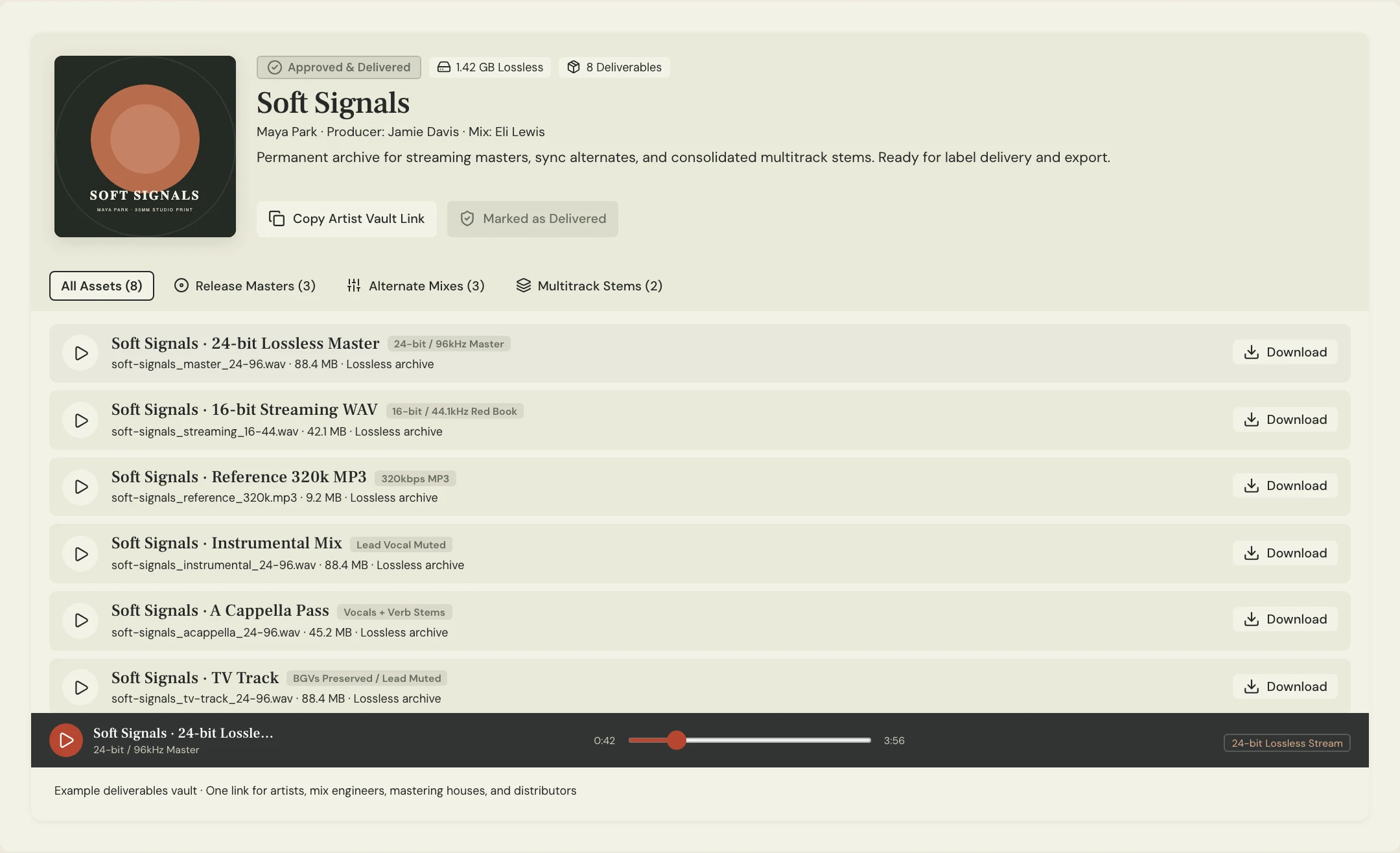
Keep the brief, feedback, and final package connected in the song workspace. In MixPass, the vault can organize the finished assets while the room retains the discussion. Review filenames and alternate versions before confirming that the release package is complete.
A few more things
Common questions
Should I send references for mastering?
References can be useful when you explain the overall tonal, dynamic, or release characteristic you mean. Ask the engineer what context they prefer, and use legitimate listening links.
Should I remove the mix-bus processing?
Discuss it with the mastering engineer. Explain which processing is part of the approved creative sound, and provide alternatives if they request them.
Does every release need the same master format?
No. Confirm the current requirements of the intended destinations and the engineer’s delivery plan. Different uses may require different files.
Who should approve the master?
Name a responsible contact who can gather the team’s feedback and confirm the exact file. Make any additional artist, label, or band approval steps explicit.
Further reading
Technical background from the original sources referenced in this guide.
Your next pass
Give the song a shared home.
Keep the versions, lyrics, feedback, and people together in MixPass.