
The short answer
Before a remote co-writing session, share the starting demo, current lyrics, and a short statement of what you want to write. Agree on roles, session length, and how ideas will be captured. Check the call and playback setup, then leave space for unfinished work. End by naming the next task and the version everyone should use.
Keep these in mind
- Share enough context to start writing without overproducing the idea.
- Check the call, playback, and recording setup before the session.
- Finish with a captured idea and a clear next handoff.
What music and lyric ideas should you bring?
Bring one or two ideas you are willing to develop: a verse, a hook phrase, a chord movement, or a demo with a clear open question. A co-writing session does not require a finished song. It does benefit from knowing whether you want help finding the central idea or improving a specific section.
Share the starting materials early enough for the other writer to listen. Explain which parts you want to preserve and which are open. If your reference is about storytelling or melodic shape, say so; otherwise your partner may assume you want to recreate the production sound.
What should you check before the session starts?
Test your call, microphone, headphones, and a way to play the demo. Decide who will record scratch ideas and how those recordings will be shared. MixPass can hold the demos and lyrics around the session; use an appropriate calling or recording tool for the live conversation.
Do not assume ordinary video-call audio is a synchronized remote recording system. For a simple writing session, taking turns singing or playing may be sufficient. If simultaneous performance is essential, choose and test a setup designed for it before the creative session.
- Starting demo opens and plays for both writers.
- Current lyric sheet is easy to find.
- A scratch-recording method is ready.
- The call setup has been tested with music, not only speech.
- Roles, session length, and follow-up timing are agreed.
What does a useful co-writing agenda look like?
Keep the agenda light enough for discoveries. Start by listening to the idea and describing the goal, spend the main session on one open section, then record what emerged before the end. Capturing a rough idea matters more than polishing a performance while the melody is still changing.
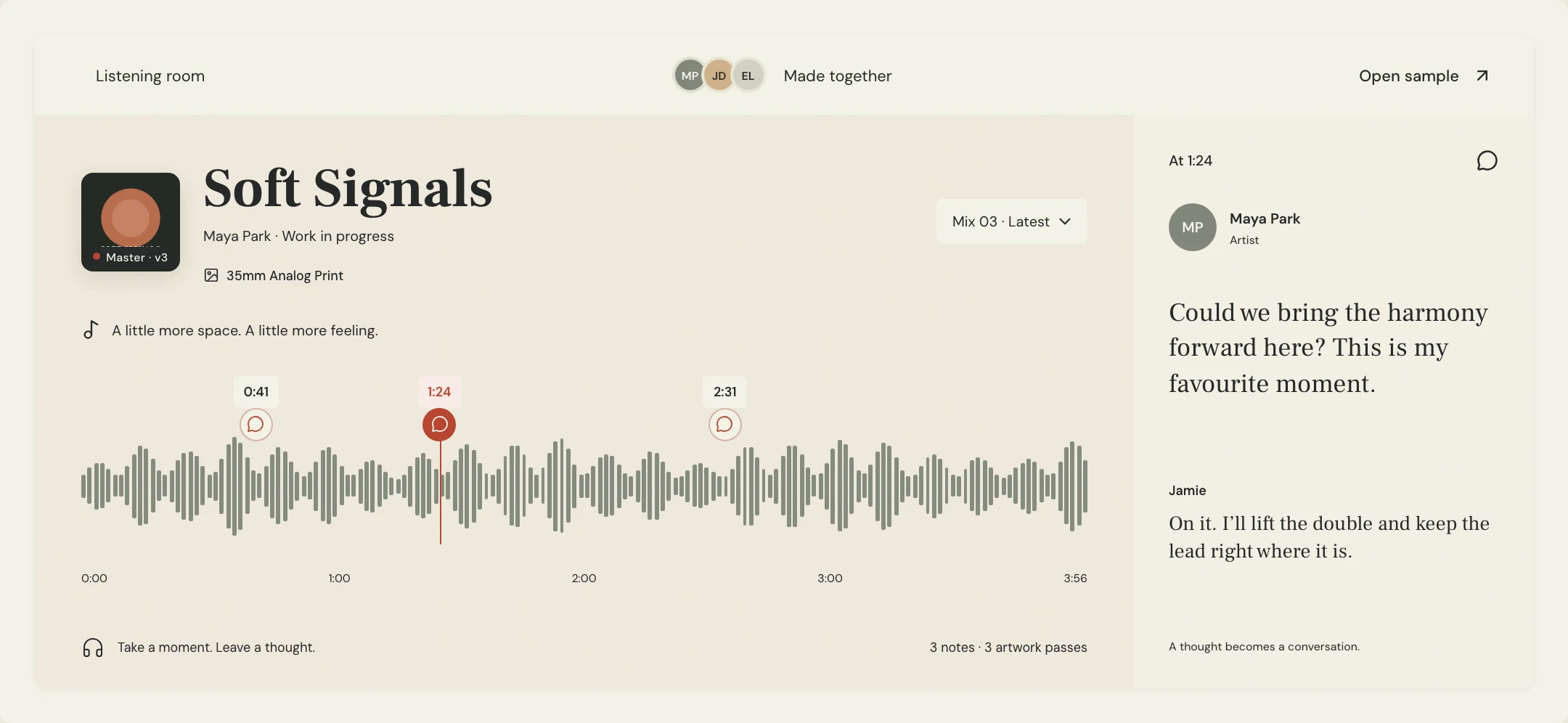
Constructed example: the Soft Signals writers have a verse and want a chorus that feels hopeful without becoming triumphant. Their session brief names that tension, leaves the bridge open, and reserves time for a scratch vocal rather than assuming they will complete the entire song.
SESSION: Soft Signals chorus writing
STARTING POINT: Verse demo 01 and lyric sheet 01
GOAL: A hopeful chorus that keeps the intimate point of view
OPEN: Chorus melody and last line
KEEP: Verse lyric and conversational delivery
CAPTURE: Record a scratch take of each promising chorus
END WITH: One named demo, working words, and the next task
Copy or download, then fill in the details for your song.
What should you save after a co-writing session?
Upload the chosen scratch demo and write a short recap while the decisions are fresh. Note useful alternatives, words still in doubt, and who is expected to work next. A voice memo named with the song and section is easier to revisit than an unlabeled recording inside a long message thread.
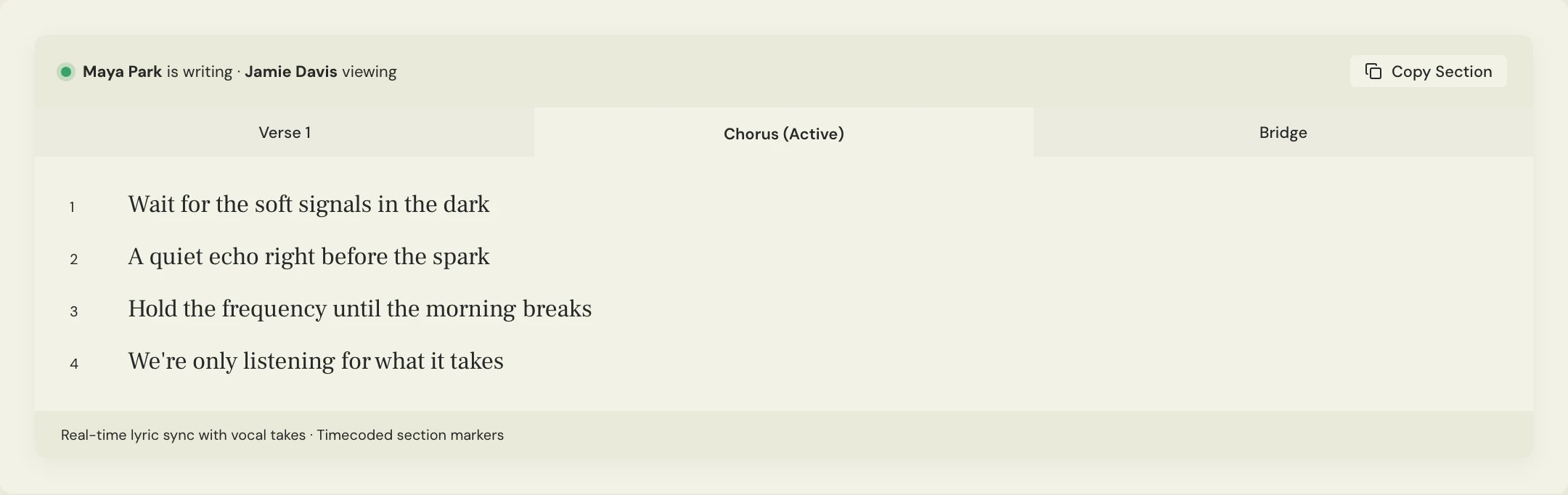
Update the shared lyric pad, then connect the words to the demo version in your notes. If you need another session, define its question: “Resolve the bridge point of view” is more useful than “Finish song.” Discuss credits and permissions directly rather than assuming the session recap establishes an ownership agreement.
A few more things
Common questions
Do I need a finished demo before co-writing?
No. Bring a starting point and a clear question. A short melody, lyric idea, or chord progression can be enough if both writers understand what they are trying to explore.
Does MixPass provide a video call for the session?
Use a separate calling tool for the live conversation. MixPass organizes the surrounding audio passes, lyrics, feedback, and supporting files.
Should we record the entire writing call?
Agree on recording and how it will be used before doing so. Often a few clearly named scratch takes are easier to review than an entire call recording.
What if we do not finish the song?
Save the strongest idea, record what remains uncertain, and assign the next task. A productive session can resolve one important section without completing the whole song.
Your next pass
Give the song a shared home.
Keep the versions, lyrics, feedback, and people together in MixPass.